
How Global Automotive Design Priorities Are Shaping the Use of EPP

The global automotive industry is undergoing a significant transformation. Stricter emission regulations, rising safety expectations, and sustainability goals are reshaping vehicle design and material selection in major markets, such as Europe, North America, and parts of Asia. Within this context, expanded polypropylene or EPP, is emerging as a material of choice due to its capability of engineering recyclable and lightweight automotive components.
EPP demand is no longer limited to basic cushioning. Its application now spans structural safety components, energy-absorbing systems, and packaging solutions that support efficient manufacturing and logistics. These roles are grounded in measurable technical properties and evolving vehicle design requirements.
Table of Contents
- Understanding EPP material properties
- Density and impact performance
- EPP in energy absorption and crash protection
- Lightweighting and efficiency in automotive design
- Thermal and acoustic performance
- Sustainability, recyclability and lifecycle impact
- Technical application areas in vehicles
- Global automotive trends influencing EPP demand
- Looking ahead to 2026 and beyond
Understanding EPP material properties
Expanded polypropylene foam (EPP) is a closed-cell thermoplastic made by expanding polypropylene beads under heat and pressure. This process results in a lightweight, resilient cellular material with a unique set of mechanical properties suitable for automotive use.
Key technical characteristics of EPP include:
- Density range: Approximately 18-260 grams per litre, depending on grade and application.
- Closed-cell structure: Enhances energy absorption and impact resistance through controlled deformation and recovery.
- High strength-to-weight ratio: Offers structural support while reducing overall vehicle mass.
- Thermal and acoustic insulation: Helps manage noise, vibration, and heat transfer.
- Recyclability and chemical resistance: Support lifecycle and sustainability goals
These characteristics allow EPP to be used in both impact-critical and non-load-bearing automotive components, while also aligning with upcoming automotive regulations related to vehicle lightweighting, recyclability, and safety performance. As global regulatory frameworks increasingly assess fleet-level emissions, material recyclability, and crash safety outcomes, EPP offers original equipment manufacturers a technically robust alternative to heavier or less recyclable materials, supporting compliance without compromising functional performance.
Density and impact performance
Material density strongly influences how EPP behaves under load. Higher density grades generally provide greater compressive strength and energy absorption, while lower density grades offer lighter weight with sufficient resilience for lower impact applications.
In automotive crash simulation and testing, EPP’s energy absorption is often characterised using stress–strain curves generated from compressive and tensile tests at varying strain rates. These tests capture how the foam performs under slow and dynamic loading conditions similar to real-world impacts. Published mechanical models are used in simulations (for example, LS-DYNA material models) to predict performance in scenarios such as low-speed bumper impacts and pedestrian protection cases.
The ability of EPP to recover its shape after deformation, a property known as elastic rebound, is critical for multi-impact scenarios, such as repeated minor collisions in bumper applications. This differs from brittle foams that may crush permanently under similar conditions.
EPP in energy absorption and crash protection
One of the technical drivers of automotive EPP demand is its capacity to absorb and dissipate kinetic energy during impact events. In crash protection systems, this energy management ability can be quantified using energy absorption metrics during compression testing. EPP’s cellular structure enables it to deform under load, absorb energy, and then return to its original shape, providing consistent performance in repeated minor impact scenarios.
Crash applications for EPP include:
- Pedestrian protection systems that incorporate foam elements to reduce injury risk in low-speed impacts.

- Door and side impact padding that provides lateral energy absorption without significant weight addition.

- Headrests and knee bolsters that enhance occupant safety through controlled cushioning.

- Roof liners and pillar trims that contribute to occupant head protection during rollover or side impact events.

- Energy-absorbing inserts in instrument panels help manage impact forces in frontal collisions.

- Seat impact absorbers and load-distribution elements that support occupant protection in rear-impact scenarios.
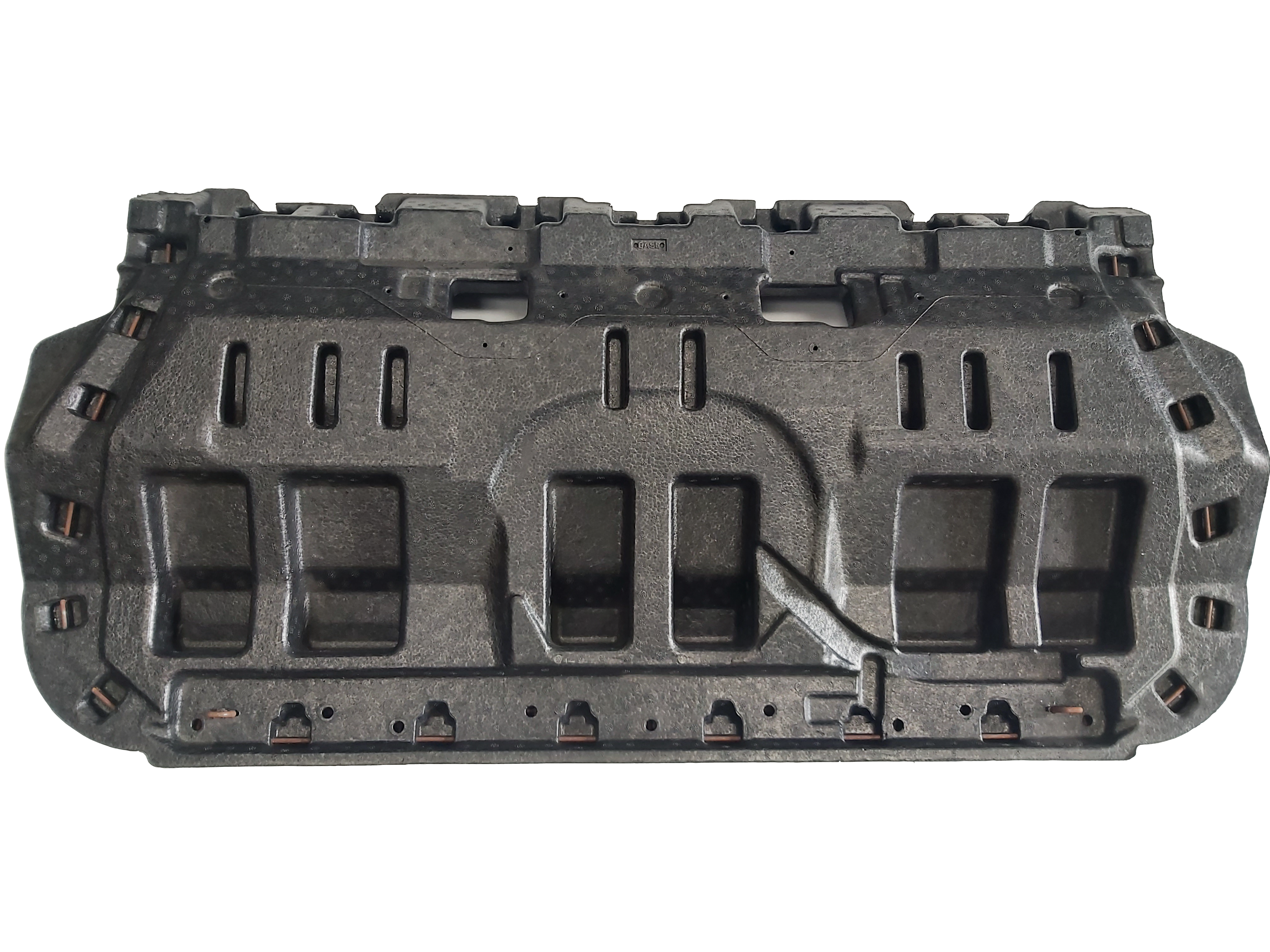
The balance between energy absorption and rebound performance is often confirmed through finite element analysis (FEA) and physical testing, which helps OEMs optimise foam density, geometry and placement for each specific application.
Lightweighting and efficiency in automotive design
Reducing vehicle mass remains a top priority globally due to fuel economy standards and electric vehicle range considerations. EPP’s low density, often 20-250 g/l, helps replace heavier materials such as metals or rigid plastics in non-structural components.
Lightweighting advantages include:
- Lower fuel consumption: reduced inertia leads to more efficient acceleration and braking.
- Extended EV range: less vehicle mass can translate into longer electric range.
- Regulatory compliance: assists manufacturers in meeting fleet-wide emission and efficiency targets.
Unlike some alternative materials, EPP maintains its mechanical performance at low densities, supporting both safety and weight reduction goals.
Thermal and acoustic performance
Electric vehicles and modern internal combustion platforms alike benefit from materials that manage temperature and noise. EPP provides thermal insulation due to its closed cells, which trap air and reduce heat transfer. It also contributes to noise, vibration, and harshness (NVH) control by damping sound and vibration within cabins and panels.
These additional functional properties make EPP attractive for interior components such as door pads, floor elements, and trunk liners, where insulation benefits improve passenger comfort while contributing to lighter overall construction.
Sustainability, recyclability and lifecycle impact
Sustainability considerations are no longer limited to voluntary goals and are increasingly becoming regulatory requirements in key automotive markets. From 2026 onwards, frameworks such as the European Union End-of-Life Vehicles regulation mandate that new vehicles must contain a minimum percentage of recycled plastic content, currently defined at 25 percent. These requirements are reshaping how materials are evaluated during vehicle design and supplier selection.
Within this regulatory context, EPP aligns with circular economy principles due to its long service life and full recyclability. As a mono-material thermoplastic, EPP can be collected, reprocessed, and reused at end-of-life without complex material separation. This differentiates it from multi-material or composite solutions that pose challenges for recycling compliance.
Automotive manufacturers and tier 1 suppliers are therefore assessing materials not only on performance and weight, but also on their ability to support recycled content targets, end-of-life recovery pathways, and export compliance.
Technical automotive EPP applications
Beyond crash safety components, EPP is used in areas where its mechanical and physical properties directly support vehicle performance:
- Exterior systems: Impact management elements such as bumper cores and side impact shields.
- Interior systems: Seat cores and ergonomic cushioning elements, headrests and bolsters.
- Under-bonnet insulation: Where thermal stability and vibration resistance are important.
- Battery pack cushioning: In electric vehicles, EPP can help protect lithium-ion modules from vibration and minor impacts.
- Transport and packaging: Reusable EPP packaging protects components during transit, reducing part damage and logistics waste.
Global automotive trends influencing EPP demand
Automotive regions abroad are influencing EPP adoption through regulatory and market forces:
- Europe: Strong emission and recyclability standards encourage lightweight and recyclable materials.
- North America: Safety and efficiency targets drive lightweight crash-compatible designs.
- Asia: Export-oriented production aligns material use with global compliance requirements.
These trends are creating a sustained rise in demand for engineering materials like EPP that can balance performance, safety, sustainability and weight.
Looking ahead to 2026 and beyond
As automotive platforms evolve and electrification expands, EPP is poised to play a growing role in both structural and non-structural applications. Technical modelling, CAE validation, and material testing will continue to refine how EPP grades are selected and deployed for specific use cases.
Automotive design priorities such as energy absorption performance, lightweighting and recyclability will remain central drivers of EPP adoption internationally. With increasing emphasis on measurable sustainability outcomes, the demand for advanced EPP solutions in automotive is expected to remain resilient across global markets.
Featured Blogs
How Global Automotive Design Priorities Are Shaping the Use of EPP
The global automotive industry is undergoing a significant transformation. Stricter emission regulations, rising safety expectations, and sustainability goals are reshaping vehicle design and material selection in major markets, [...]

Rotomoulded Road Barriers: Enhancing Safety on Indian Highways
Road safety remains a critical concern across India’s expanding highway network. Rapid urbanisation, rising vehicle ownership and increased freight movement have significantly raised traffic volumes, intensifying exposure to [...]

What is EPP Raw Material? Properties, Uses and Benefits
Expanded Polypropylene raw material has become an important part of modern engineering and packaging solutions because it offers repeatable impact performance, low weight and long service life under [...]

Global Market Trends in Rotomoulding in 2026: Key Drivers and Innovations
The global rotational moulding industry is entering 2026 on a steady growth path, driven by demand for durable, lightweight and material-efficient polymer components. As the automotive, agriculture, construction [...]
Get in Touch with Us
We look forward to connecting with you!


