
EPP vs Solid Plastic Sun Visors: Global Trends and the Shift in Commercial Vehicles
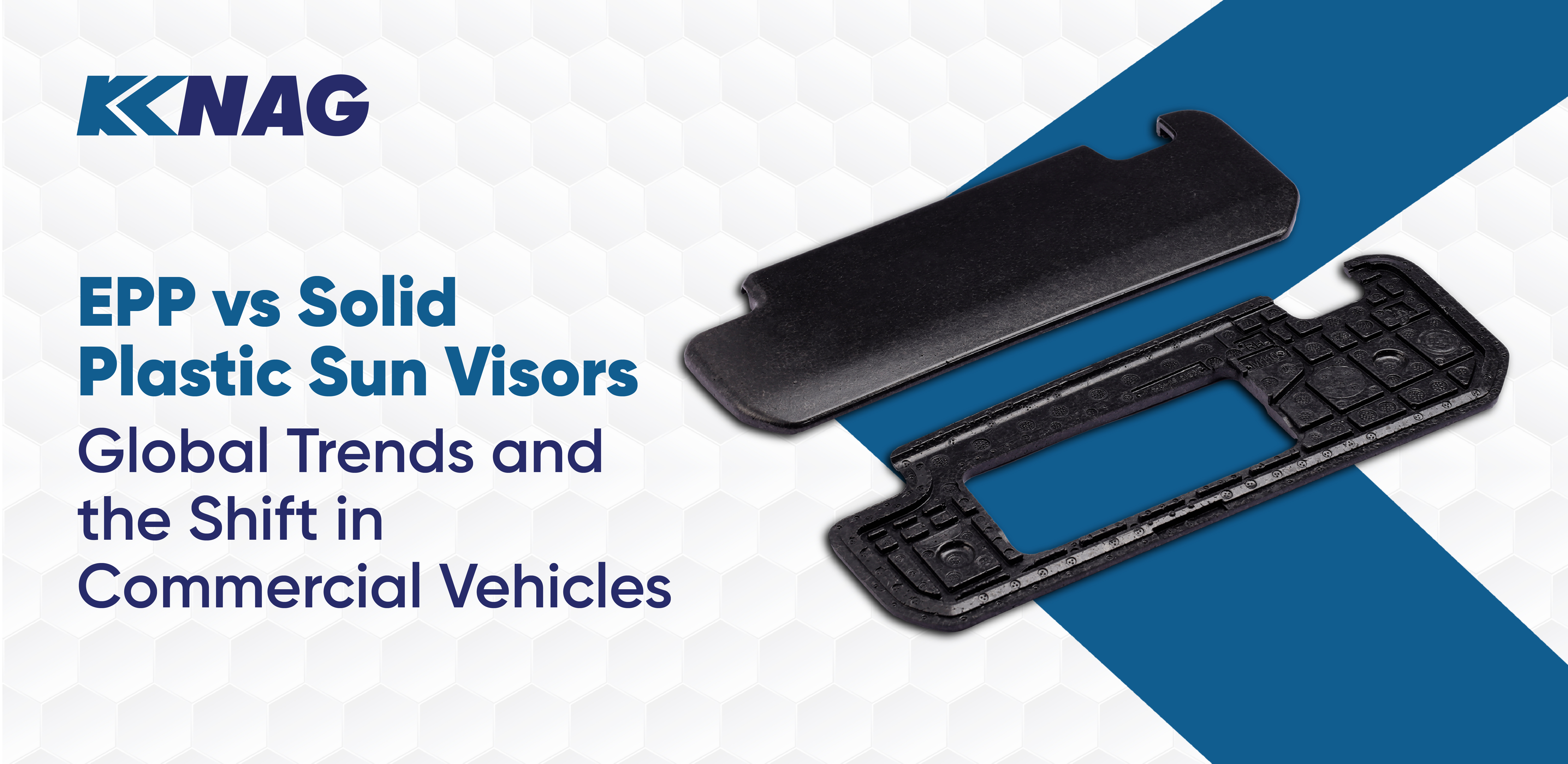
The global automotive sector is moving through a period of significant transformation. For years, the cabin interiors of heavy-duty trucks and buses relied on traditional manufacturing methods. However, as transport regulations tighten and the demand for efficiency grows, the materials used in these spaces are being reconsidered. One of the most notable shifts is the transition from solid plastic sun visors to those made from expanded polypropylene foam.
Table of Contents
This shift reflects a sharper focus on safety, weight management and long-term durability in the commercial vehicle segment.
The Traditional Solid Plastic Visor
For decades, solid plastic was the standard for commercial vehicle sun visors. These were typically manufactured using injection moulding processes, resulting in a hard, rigid shell. While they served the basic purpose of blocking glare, the solid nature of the material meant that durability was often tied to material density. Over time, constant exposure to cabin vibrations and the high thermal load found behind a windscreen tested the structural limits of these rigid shells, often resulting in a loss of performance over the vehicle’s lifespan.
Why the Automotive Industry is Shifting to EPP Sun Visors
As the industry looks for better alternatives, EPP sun visors have emerged as a popular choice for modern interiors. This material transition represents a move toward cellular design using expanded polypropylene foam, a closed-cell bead material. Unlike traditional solid plastics, the unique architecture of this foam allows it to manage physical stress through energy displacement. This shift is driven by the need to create cabin environments that are more resilient to the high-utilisation demands of long-haul transport.
Performance Comparison: EPP vs Solid Plastic
| Feature | Solid Plastic Visors | EPP Sun Visors |
|---|---|---|
| Weight | Heavy increases vehicle’s kerb weight | Exceptionally lightweight, improves fuel efficiency |
| Impact Safety | Can shatter or crack upon impact | Superior energy absorption, cushions impact |
| Durability | Prone to UV degradation and warping | Highly resistant to heat and chemicals |
| Acoustics | Can vibrate and contribute to noise | Acts as a natural sound-dampening material |
| Sustainability | More challenging to recycle depending on the polymer type and contamination | Recyclable and reusable under controlled processes |
Key Advantages of EPP in Commercial Vehicles
- Enhanced Driver Safety
Safety is the primary driver behind the adoption of EPP sun visors. In commercial vehicles, interior components must meet strict head-impact criteria. In an accident, a hard plastic visor acts as a solid surface that can cause trauma. The cellular structure of expanded polypropylene foam allows it to compress and absorb energy, significantly reducing the force transmitted to the occupant. - Resistance to Harsh Environments
Commercial vehicles operate in diverse climates. A truck might face sub-zero temperatures at night and intense heat during the day. Solid plastic expands and contracts at rates that lead to warping. EPP sun visors are thermally stable, ensuring they remain functional and hold their position for the duration of the vehicle’s life. These sun visors are designed for the rigours of the road. - Design Flexibility
Because the foam can be moulded into complex shapes, it is easier to integrate mirrors, ticket holders and electronic components directly into the visor body. The surface can be covered with various fabrics to match the cabin interior, providing a premium feel.
Global Trends in Cabin Design
The trend globally is a move towards “soft-touch” interiors. Drivers and fleet operators are seeking higher standards of comfort. Hard, noisy and heavy plastics are increasingly being replaced by high-performance foams.
Interest in EPP-based sun visors is growing steadily across emerging markets. As safety standards gradually align with global benchmarks, the transition from traditional materials to engineered foams is becoming more common. This shift is aided by the presence of EPP foam manufacturers in India who provide the necessary local supply chain support for large-scale production.
Sustainability and the Circular Economy
Sustainability is a growing priority in automotive manufacturing. Traditional solid plastic components can be challenging to process at the end of a vehicle’s life, which often leads to them being sent to landfills. In contrast, EPP is a monomaterial that is technically capable of being melted down and repurposed into new polymer engineered products. This characteristic provides an opportunity for manufacturers to better align with environmental targets and work towards reducing the total carbon footprint of the vehicle.
Conclusion
The transition to Expanded Polypropylene (EPP) is a strategic move towards safer, more efficient commercial vehicles. At K. K. Nag, we apply over 30 years of expertise in critical applications, using value engineering and robust tool development to optimise complex designs for performance and cost.
This strength is managed through the K. K. Nag Operational Excellence (KOpEx) framework, ensuring our engineering skills result in high-quality manufacturing. We remain dedicated to providing our business partners with the reliable, high-performance components needed for the future of the industry.
Featured Blogs
EPP Dunnage Solutions for High-Value Glass
Glass is one of the most demanding materials to transport. Whether it is an automotive windshield with embedded sensors, a large-format façade panel destined for a high-rise, a [...]
Rotomoulded Floating Barriers for Marine and Inland Water Applications
Floating barriers are used across ports, marinas, reservoirs and industrial facilities to mark restricted zones, separate operational areas and manage floating debris. However, the conditions in these environments [...]
The Role of EPS Trays in Plant Tissue Culture and Agri-Biotech
Plant tissue culture and agri-biotech laboratories across India operate under exacting operational parameters. Micropropagation demands stringent contamination control, precise moisture management and root-zone thermal isolation. Traditional nursery [...]
Engineering EPS Packaging for Diagnostic Equipment
When shipping delicate diagnostic equipment or sensitive lab instruments, failure during transit is simply not an option. These devices represent significant financial investments for hospitals, laboratories and diagnostic [...]
Get in Touch with Us
We look forward to connecting with you!


