
How Rotational Moulding Products Improve Durable Outdoor Gear
What makes rotational moulding products suitable for outdoor gear?
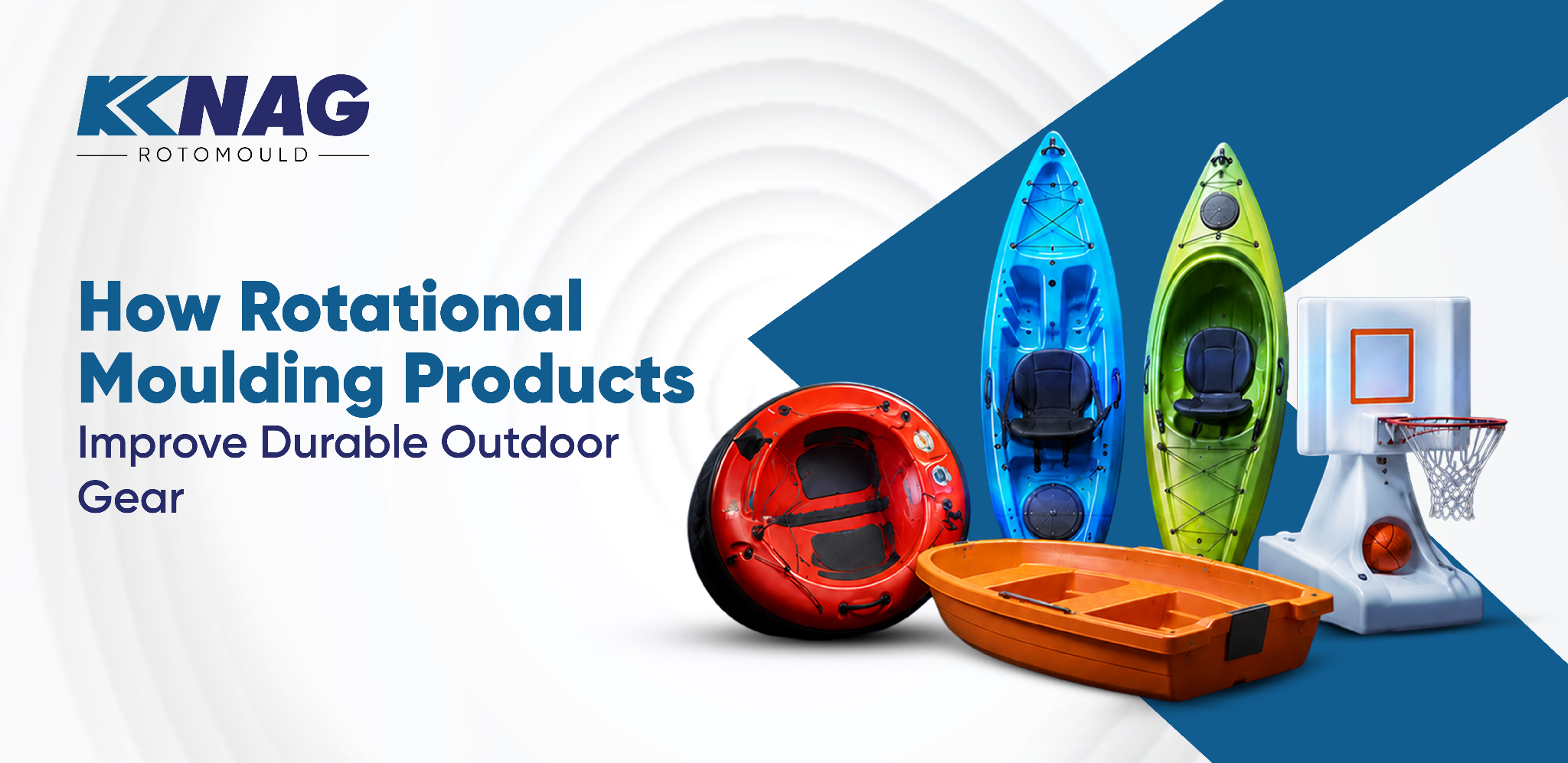
Outdoor gear is built to take abuse: from rough handling and heavy loads to rain, sunlight and repeated use. Rotational moulding products are well suited for these conditions because they offer seamless construction, high impact resistance, weather durability and design flexibility. This helps manufacturers create rugged, long-lasting products that perform reliably in demanding outdoor environments.
That shift has changed product design. A cooler must stay strong after impact. A storage bin must protect contents from dust, moisture and movement. A utility box must remain reliable after repeated transport and outdoor use. This is where rotomoulding, or rotational moulding, becomes highly relevant. It creates hollow plastic products that are seamless, durable and better suited to real operating conditions.
Table of Contents
Why Outdoor Gear Needs Better Engineering
Outdoor products face more stress than standard storage items. They are stacked, dragged, loaded into vehicles, exposed to sunlight and used near water, mud and dust. Ordinary plastic products may crack, weaken or lose shape over time under these conditions.
This is why outdoor gear now needs better engineering. Strength, portability, weather resistance and impact performance all need to work together in one product body. For manufacturers, the question is no longer just how to make the product. It is how to make it last.
Why Rotomoulding Is Gaining Ground
The growth of Rotomoulding reflects the wider demand for hollow products that combine strength with design flexibility. It is especially useful where products need to be durable, application-specific and suitable for outdoor use.
Unlike processes better suited to smaller rigid parts, Rotomoulding works well for larger hollow products. It gives manufacturers more freedom to create usable shapes without adding seams or weak joints. This makes it a practical option for a growing range of rotational moulding products.
As demand grows for durable outdoor equipment, many brands are partnering with a rotational moulding manufacturer or rotational moulding company to develop products tailored to specific operating conditions. The ability to create custom rotational moulding solutions allows manufacturers to design products around performance, durability and end-user requirements rather than standardised shapes.
For businesses that need outdoor and rough-use solutions, that matters. The process is not only about shape-making. It is about improving how the final product performs over time.
What Makes Rotomoulding Suitable for Outdoor Gear
Rotomoulding uses heat and rotation to form hollow plastic parts inside a mould. The material coats the mould evenly and cools into a one-piece structure.
This process suits outdoor gear because it supports:
- Seamless hollow construction, which helps reduce failure points
- Strong outer bodies, which are better suited to impact and repeated handling
- Integrated features, such as handles, lids and reinforcement zones
- Design flexibility, which allows products to be built around actual use conditions
- Application-specific forms, which help brands move beyond standard shapes
These are the qualities that make Rotomoulding valuable for outdoor products that need durability without losing usability.
Rotational Moulding Across Industries: Built for Diverse Applications
The versatility of rotational moulding extends far beyond a single product category. Its ability to create large, seamless and durable hollow structures has made rotational moulding products a preferred choice across industries that demand reliability in challenging operating environments. From marine infrastructure and agriculture to logistics and public utilities, these polymer-engineered products support a wide range of industrial and commercial applications.
Marine and Aquatics
Marine environments require products that can withstand constant exposure to water, sunlight and changing weather conditions. Rotational moulding enables the manufacture of durable custom-moulded products such as:
- Buoys for navigation and safety
- Pontoon floats for floating structures
- Jetty blocks and marine support components
The corrosion resistance and long service life of these products make them suitable for demanding aquatic applications.
Logistics and Supply Chain
The logistics sector relies on durable products that can withstand frequent handling, transportation and varying storage conditions. Rotational moulding is commonly used to manufacture:
- Insulated ice boxes for temperature-sensitive transport
- Heavy-duty transit cases for equipment and material protection
These products combine strength, impact resistance and long service life.
Agriculture and Farming
Agricultural operations require products that can perform reliably in demanding outdoor environments. Typical rotomoulded applications include:
- Water storage tanks
- Feeding troughs
- Wheelbarrow tubs and utility containers
The seamless construction and weather resistance of rotomoulded products contribute to their suitability for daily farm use.
Urban Infrastructure
Municipal and infrastructure projects often require durable products capable of withstanding continuous public use. Rotational moulding supports applications such as:
- Waste bins
- Road barriers
- Traffic cones and safety equipment
- Equipment storage containers
- Utility chests
- Site-use transport boxes
These products benefit from low maintenance requirements and resistance to environmental exposure.
Recreation and Hospitality
The recreation and hospitality sectors utilise rotational moulding for products that must balance durability, safety and design flexibility. Common examples include:
- Playground slides
- Outdoor furniture
- Portable toilets
The process allows manufacturers to create complex shapes while maintaining structural integrity and user safety. Alongside durability, sustainability is becoming an important consideration across industries. Many rotational moulding products are manufactured using recyclable polymer materials and are designed for long service life, reducing the need for frequent replacement.
Why Polymer Engineered Products Matter
The process matters, but the polymer solution matters just as much. Polymer engineered products are designed around the application, environment and performance requirement.
An outdoor cooler used near saltwater does not face the same conditions as a field-use storage bin or a dockside utility box. Each product may need a different balance of impact resistance, ultraviolet stability, moisture resistance and handling performance.
This is why outdoor gear should not be treated as generic plastic. The right polymer, combined with the right process, helps create products that stay durable and usable through longer operating cycles.
Key Benefits of Rotational Moulding Products
The growing adoption of rotational moulding products is driven by several practical advantages:
- Seamless construction that reduces potential failure points
- High impact resistance for demanding environments
- Excellent weather and corrosion resistance
- Design flexibility for application-specific requirements
- Consistent wall thickness across complex shapes
- Long service life with low maintenance requirements
These benefits make rotational moulding a preferred manufacturing process for many polymer engineered products used in outdoor and industrial applications.
Conclusion
Outdoor gear is moving towards stronger, more application-specific design. Products are expected to do more than look rugged. They must withstand weather exposure, transportation, impact and repeated use while maintaining reliable performance over time.
That is why rotational moulding products continue to gain relevance across outdoor, industrial and infrastructure applications. When combined with the right polymer engineered products, they deliver durability, functionality and long-term value in demanding operating environments.
For K. K. Nag, rotational moulding is not simply a manufacturing process. It enables the development of custom moulded products designed around specific application requirements, helping customers achieve the performance, durability and reliability their products demand.
Featured Blogs
EPP Dunnage Solutions for High-Value Glass
Glass is one of the most demanding materials to transport. Whether it is an automotive windshield with embedded sensors, a large-format façade panel destined for a high-rise, a [...]
Rotomoulded Floating Barriers for Marine and Inland Water Applications
Floating barriers are used across ports, marinas, reservoirs and industrial facilities to mark restricted zones, separate operational areas and manage floating debris. However, the conditions in these environments [...]
The Role of EPS Trays in Plant Tissue Culture and Agri-Biotech
Plant tissue culture and agri-biotech laboratories across India operate under exacting operational parameters. Micropropagation demands stringent contamination control, precise moisture management and root-zone thermal isolation. Traditional nursery [...]
Engineering EPS Packaging for Diagnostic Equipment
When shipping delicate diagnostic equipment or sensitive lab instruments, failure during transit is simply not an option. These devices represent significant financial investments for hospitals, laboratories and diagnostic [...]
Get in Touch with Us
We look forward to connecting with you!


