
Returnable EPP Dunnage for Class-A Painted Automotive Parts
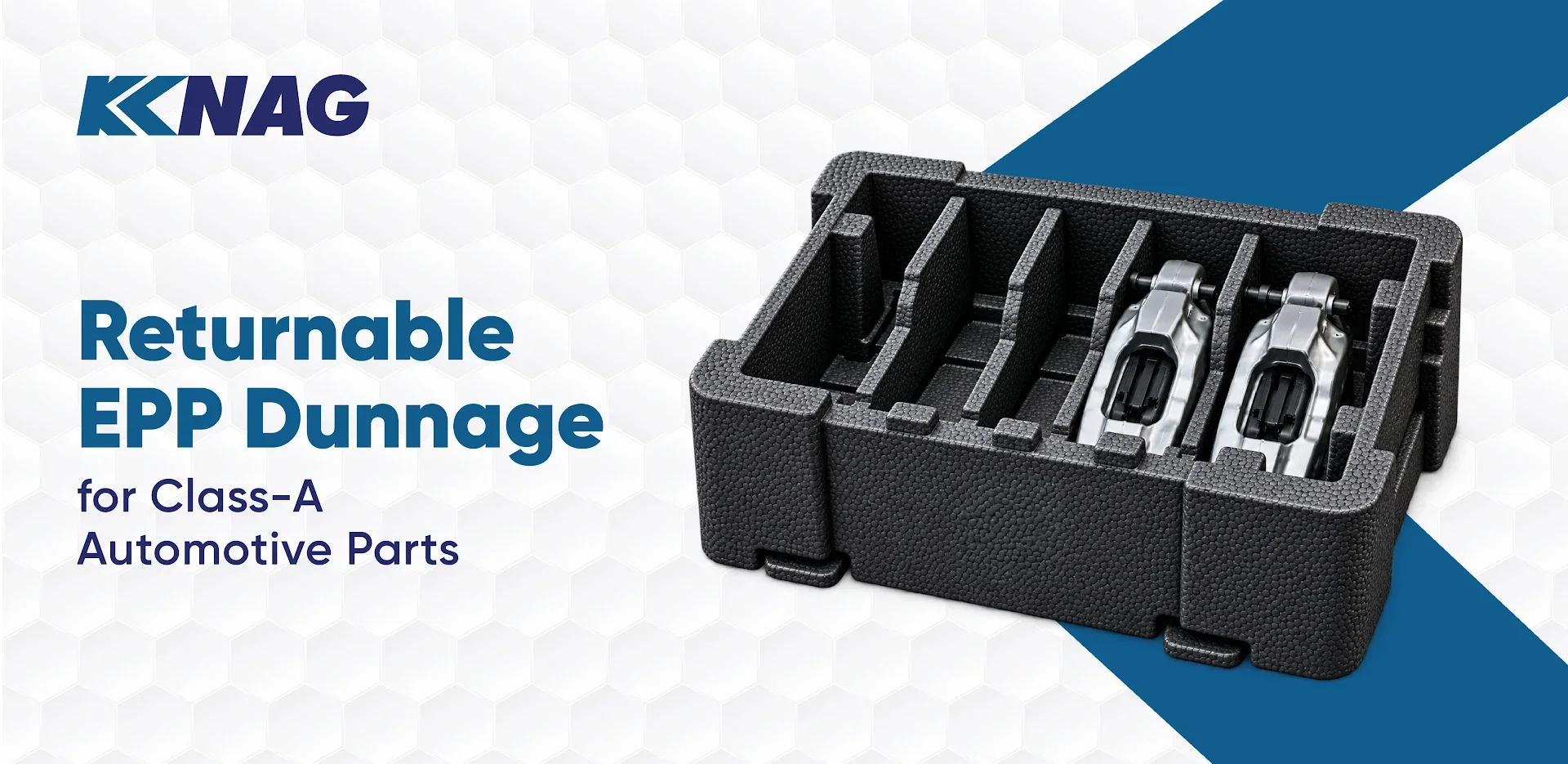
Class-A painted automotive parts are the visible surfaces of a vehicle where even minor scratches, scuffs or dents can compromise appearance and perceived quality. Class-A painted automotive parts are components with highly visible or appearance-critical surfaces where scratches, scuffs, dents and other cosmetic defects can affect perceived vehicle quality. These components move repeatedly between suppliers, Tier-1 manufacturers and OEM assembly plants, making effective transit protection essential.
According to Grand View Research, the global automotive reusable packaging market is expanding rapidly, projected to grow at a CAGR of roughly 6.8% to 7.5% through 2033.
As automotive manufacturers adopt lean manufacturing and just-in-time production, returnable EPP dunnage has become an important part of quality assurance, protecting Class-A automotive parts during repeated logistics cycles while reducing packaging waste and operating costs across the OEM supply chain.
Table of Contents
- 01. Why Class-A Painted Automotive Parts Need Special Transit Protection
- 02. Common Causes of Scratches, Dents and Surface Defects in Transit
- 03. What Makes Returnable EPP Dunnage Ideal for Painted Parts
- 04. Key Design Considerations for Returnable EPP Dunnage
- 05. Sustainability and Operational Benefits for OEMs and Tier-1 Suppliers
- 07. How K. K. Nag Supports Automotive Packaging
- 08. Conclusion
Why Class-A Painted Automotive Parts Need Special Transit Protection
In contrast to structural automotive components, Class-A painted parts cannot tolerate even minor cosmetic defects. Exterior panels, bumpers, spoilers and painted trim pieces must arrive at the assembly line without unacceptable cosmetic defects because surface imperfections often require costly repainting or complete part replacement.
Transit damage is usually caused by repeated handling, vibration, abrasion and improper storage rather than a single impact. Since scratches and pressure marks can require rework or refinishing, transit protection is essential for maintaining painted finish quality and helping reduce warranty costs.
Common Causes of Scratches, Dents and Surface Defects in Transit
During loading, unloading and internal transportation, painted automotive components are exposed to continuous movement that gradually affects surface quality. Some of the most common causes include:
- Component-to-component contact during transportation
- Vibration causing continuous rubbing between painted surfaces
- Improper nesting that creates uneven pressure points
- Sliding friction during repeated handling
- Stack loads transferring excessive force onto delicate surfaces
- Dust and debris trapped between contacting components
Dunnage functions as a packaging system that cushions, separates and accurately positions components inside returnable containers, helping minimise movement and contact during transit. This controlled positioning plays a critical role in protecting Class-A finishes across multiple logistics cycles.
What Makes Returnable EPP Dunnage Ideal for Painted Parts
During transportation, automotive components experience vibration, shock loads and repeated handling. Even slight movement within the packaging can cause friction and surface abrasion. Effective returnable packaging absorbs impact energy while securely locating components throughout transit.
Expanded Polypropylene (EPP) is a closed-cell foam that absorbs and dissipates impact energy through elastic deformation. Its cellular structure compresses under load and recovers its original shape with minimal permanent deformation, providing high-energy absorption capacity, low water absorption, chemical resistance and consistent protection across repeated returnable transport cycles.
EPP preserves its performance across repeated reusable industrial packaging cycles and can be recycled at the end of its service life, depending on available recycling infrastructure, making it well suited for reusable automotive packaging programmes.
Key Design Considerations for Returnable EPP Dunnage
Several engineering factors determine packaging performance:
- Component-specific cavity geometry for accurate positioning
- Optimised material density for cushioning and structural support
- Controlled surface contact to minimise abrasion
- Anti-movement retention features that control shifting during transit
- Balanced load distribution to reduce pressure concentrations
Effective EPP dunnage balances material properties, component geometry, weight distribution and transit conditions to ensure stable positioning and consistent protection across repeated logistics cycles.
EPP Dunnage Applications for Painted Automotive Components
Automotive components vary in geometry and surface finish, making custom EPP dunnage essential for preventing movement and protecting parts during repeated logistics cycles.
- Bumpers – Prevents scratches, dents and paint damage on Class-A exterior surfaces.
- Door Panels – Supports large painted panels while minimising abrasion and pressure marks.
- Spoilers – Maintains stable positioning to protect painted finishes and complex geometries.
- Instrument Panels – Secures delicate assemblies and decorative surfaces during handling.
- Sunroofs – Cushions glass and frame assemblies against vibration and transit shocks.
- Exterior Trim Components – Prevents contact between adjacent parts and preserves cosmetic finishes.
Automotive dunnage is commonly developed using Advanced Product Quality Planning (APQP), Failure Mode and Effects Analysis (FMEA) and the Production Part Approval Process (PPAP), supported by prototype validation, dimensional verification and end-of-line inspections. Automotive suppliers may operate quality management systems aligned with IATF 16949, which incorporates the requirements of ISO 9001 along with automotive-specific requirements.
Sustainability and Operational Benefits for OEMs and Tier-1 Suppliers
The automotive industry is progressively adopting returnable EPP dunnage to reduce costs, waste and supply chain inefficiencies. Its durability helps reduce transit damage, packaging replacement and material waste while improving handling efficiency.
The environmental benefits are equally substantial. According to HSSMI, one OEM life-cycle assessment found reusable plastic packaging reduced CO₂ emissions by 95% compared with single-use cardboard under the study’s defined conditions and 1,000-use comparison. This figure is specific to that scenario.
While Nefab has reported similar project-specific results. One automotive project recycled 210,600 lb of plastic trays, reducing CO₂ emissions by 175 tonnes and saving over USD 400,000. A separate polypropylene recovery project reduced CO₂ emissions by 1,006 tonnes and eliminated 123,000 transportation miles.
How K. K. Nag Supports Automotive Packaging
Designing effective automotive dunnage requires an engineering-led approach that considers component geometry, handling conditions and long-term durability. With over 60 years of experience in polymer manufacturing, K. K. Nag combines in-house tooling, mould development, design support, value engineering and precision manufacturing to develop custom dunnage solutions for OEMs and Tier-1 suppliers.
Each solution is engineered using build-to-print manufacturing, material optimisation and application-specific cavity design to improve part protection, handling efficiency and material utilisation. This integrated approach enables consistent transit performance, supporting cost-effective, reusable automotive packaging systems.
Conclusion
Protecting Class-A automotive parts requires more than conventional packaging. Repeated handling, vibration, abrasion and transit shocks can create cosmetic defects that affect vehicle quality before components reach the assembly line.
Returnable EPP packaging combines lightweight construction, high energy absorption and reusability to minimise movement, prevent surface damage and support efficient handling throughout the OEM supply chain.
Automotive manufacturers are rapidly adopting reusable packaging strategies. Custom EPP dunnage is helping OEMs and Tier-1 suppliers reduce product damage, packaging waste and logistics costs. With decades of EPP expertise, K. K. Nag develops engineered, application-specific dunnage solutions to support reliable and efficient automotive supply chains.
FAQs
01. Why is EPP dunnage used in the automotive industry?
Ans: EPP dunnage is a reusable packaging solution made from Expanded Polypropylene (EPP) foam that securely positions automotive components during storage and transit. Its lightweight, impact-resistant and energy-absorbing properties help protect painted, precision-engineered and fragile parts from vibration, abrasion and handling damage across multiple logistics cycles.
02. Why is EPP dunnage used for Class-A painted automotive parts?
Ans: Class-A painted automotive parts require defect-free surfaces throughout the supply chain. Custom EPP dunnage helps minimise component movement, reduces surface-to-surface contact, absorbs transit shocks and minimises the risk of scratches, scuffs and pressure marks during repeated handling and transportation.
03. What are the benefits of returnable EPP dunnage?
Ans: Returnable EPP dunnage provides long-term durability, consistent cushioning performance and effective impact resistance over repeated use. It helps manufacturers reduce packaging waste, lower replacement costs, improve handling efficiency and support circular packaging initiatives without compromising product protection.
04. Which automotive components can be protected using custom EPP dunnage?
Ans: Custom EPP dunnage can protect Class-A painted automotive parts such as bumpers, door panels, spoilers and exterior trim during handling and transit. It can be designed around each part’s geometry to support secure positioning while helping minimise surface contact, movement and transit damage.

Featured Blogs
How K. K. Nag Builds Circularity into Polymer Manufacturing
The way manufacturers evaluate polymer products is changing. The question is no longer limited to whether a material can be recycled. Businesses are also considering how long [...]
Returnable EPP Dunnage for Class-A Painted Automotive Parts
Class-A painted automotive parts are the visible surfaces of a vehicle where even minor scratches, scuffs or dents can compromise appearance and perceived quality. Class-A painted automotive parts [...]
How Engineering-Led Packaging Makes Industrial Products Export-Ready
India's manufacturing sector is becoming progressively export-orientated, with engineering goods remaining the country's largest merchandise export segment. According to Engineering Export Promotion Council (EEPC India), India's engineering exports [...]
EPP Dunnage Solutions for High-Value Glass
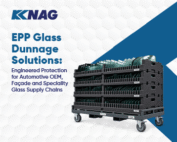
Summary EPP glass dunnage is a lightweight, reusable packaging solution that protects high-value glass from impact, scratches, edge damage and movement during transport through custom-fit cushioning and separation. [...]
Get in Touch with Us
We look forward to connecting with you!


