
Top 10 Benefits of Using EPP Boxes to Maintain Food Temperature in Transit
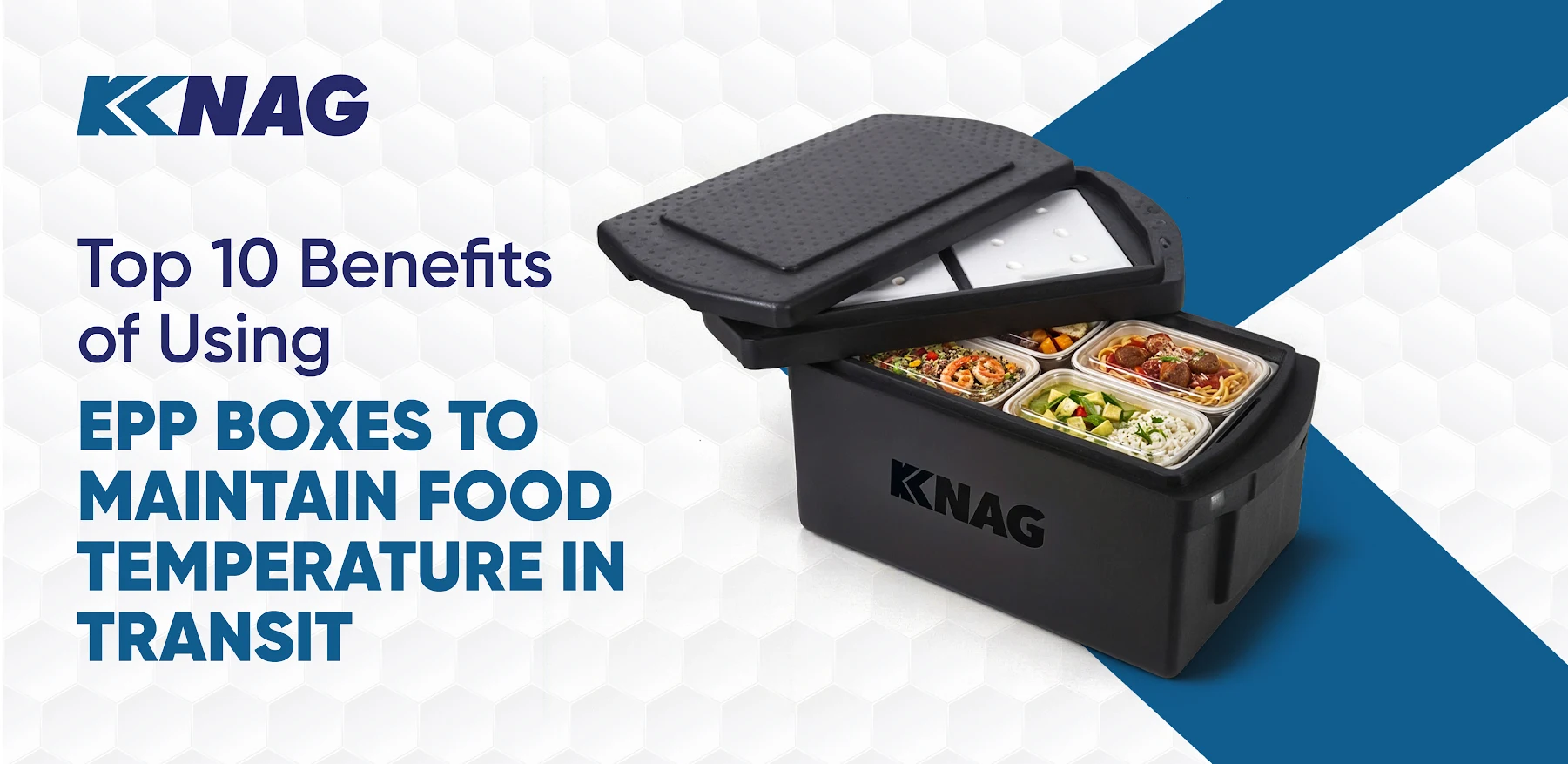
Keeping food at the right temperature during storage and delivery is essential for safety, quality and customer satisfaction. Temperature excursions increase the risk of bacterial growth, reduce shelf life and degrade taste and texture. For food delivery services, caterers and meal-kit providers, reliable thermal packaging is therefore core to operations. Expanded polypropylene foam, commonly used to make boxes for food delivery, combines insulation with durability and reusability, making it a practical choice for modern food logistics.
Table of Contents
- 01. Why EPP is ideal for food cooling and warming
- 02. 10 benefits of using EPP boxes for food cooling and warming
- 01. Reliable temperature retention
- 02. Repeatable performance over many cycles
- 03. Excellent impact and drop resistance
- 04. Lightweight, so handling is easier
- 05. Hygienic and easy to clean
- 06. Customisable internal layouts
- 07. Suitable for hot and cold applications
- 08. Reusability reduces waste and the total cost of ownership
- 09. Compatibility with food-grade standards
- 10. Stackable, brandable and operationally efficient
- 03. EPP vs other materials
- 04. Real-world applications in the food industry
- 05. How restaurants, caterers and meal-kit services benefit
- 06. Specification tips for buyers
- 07. Final thoughts
Below, we explain why EPP is well-suited to temperature-controlled food packaging and list the top benefits operators see when they move to EPP food transport boxes. Where helpful, we note practical application tips for restaurants, caterers and meal-kit services working with a reusable food delivery box manufacturer.
Why EPP is ideal for food cooling and warming
EPP is a closed-cell bead foam that traps air and provides useful thermal resistance while remaining exceptionally resilient to impacts. It is lightweight, non-absorbent and can be moulded to tight tolerances, enabling a custom moulded food delivery box design where inserts and lids create consistent thermal performance. These material traits make EPP attractive for insulated food delivery boxes and other thermal food packaging solutions, especially when designed as a food grade EPP box for safe food contact.
Designers often pair EPP with gel packs, phase change materials or passive inserts to extend hold times for chilled or hot food. Where logistics permit return and reuse, the lifecycle environmental profile of EPP boxes becomes particularly favourable. Life-cycle studies of catering systems report substantial reductions in environmental impact when reusable EPP boxes replace single-use alternatives.
10 benefits of using EPP boxes for food cooling and warming
1. Reliable temperature retention ice beverage
EPP’s closed-cell structure gives steady insulation so chilled foods stay cold and hot foods retain heat for longer.
When paired with gel packs or phase change materials, EPP boxes can maintain safe temperatures for typical last-mile delivery windows, with EPP boxes paired with gel packs maintaining safe temperatures for 4–6 hours.
2. Repeatable performance over many cycles
EPP resists fatigue from repeated use and thermal cycling. This means kitchens and logistics teams can rely on consistent hold times across hundreds of deliveries rather than losing performance after a few trips.
3. Excellent impact and drop resistance
The material absorbs shocks and rebounds instead of cracking like brittle foams. Boxes protect packaged meals from rough handling and reduce food damage caused by falls or forklift impacts.
4. Lightweight, so handling is easier
EPP’s strength-to-weight ratio makes boxes easy to carry when empty or loaded. Lower carrier strain improves ergonomics and reduces fuel use during return trips for reusable systems.
5. Hygienic and easy to clean
EPP does not readily absorb moisture or odours. Boxes can be washed, steam cleaned or sanitised to meet food hygiene protocols with minimal degradation of material properties. This helps maintain food safety between cycles.
6. Customisable internal layouts
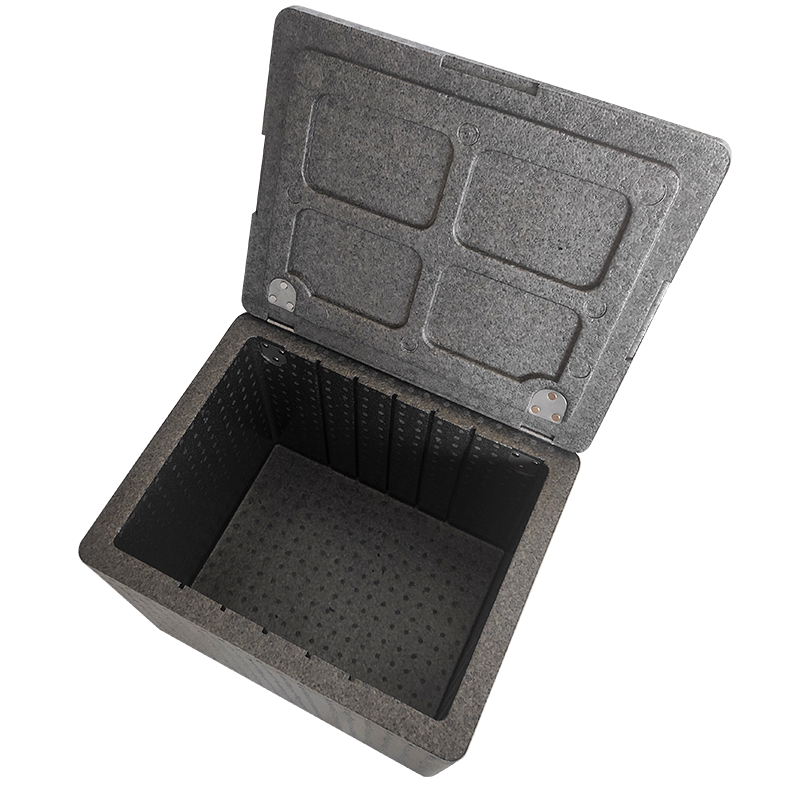
EPP can be moulded with internal recesses for trays, cold packs or hot inserts. Custom cavities reduce air gaps and improve conduction control so products reach customers at the intended temperature.
7. Suitable for hot and cold applications
EPP retains mechanical integrity over a wide temperature range from −40°C to +120°C, making it useful for chilled deliveries and for keeping hot meals warm during transit. This flexibility reduces the need for multiple box types.
8. Reusability reduces waste and the total cost of ownership
When operators run a closed-loop system that collects, cleans and returns boxes, EPP systems often produce lower lifecycle environmental impact and lower per-delivery cost than single-use packaging. Published LCA work shows meaningful reductions in overall impacts for catering services that switch to reusable EPP boxes.
A life cycle assessment of EPP boxes used in catering services found that switching from conventional packaging to reusable EPP can reduce overall environmental impacts by up to 37%.
9. Compatibility with food-grade standards
EPP grades suitable for food contact are available and widely used. Compliance with recognised standards such as FDA CFR Title 21 (USA) and EU Regulation 10/2011 (Europe), which permit EPP for direct food contact without additional migration testing, ensures regulatory acceptance. Selecting certified food-grade EPP and maintaining proper cleaning protocols supports safe and compliant use.
10. Stackable, brandable and operationally efficient
Well-designed EPP boxes nest or stack when empty and lock together when filled. This reduces depot space requirements, shortens packing time and supports consistent presentation on delivery. Many manufacturers also offer branding options to keep the unboxing experience professional.
EPP vs other materials
EPP and other expanded foam materials are both used in food transport packaging, but they serve different operational needs. For businesses evaluating insulated food delivery boxes, the differences in performance across key criteria are worth understanding.
| Property | EPP | Other Materials |
|---|---|---|
| Reusability | Hundreds of delivery cycles | Single or limited use |
| Impact Resistance | Absorbs repeated impacts and rebounds | Can crack or break under repeated stress |
| Hygiene | Non-absorbent; withstands repeated sanitization | Cleaning compatibility varies by grade |
| Temperature Range | -40°C to +120°C | Up to around 80°C depending on grade. |
| Thermal Insulation | Consistent across hot and cold applications | Better thermal conductivity per mm; suited to cold chain |
| Lifecycle Cost | Lower per-delivery cost in closed-loop systems | Lower upfront cost per unit |
| Environmental Impact | Reuse significantly reduces waste over time | Dependent on disposal and recycling infrastructure |
| Best Suited For | High-frequency reusable delivery systems | Single-use or low-cycle cold chain applications |
For food businesses running high-frequency, closed-loop delivery operations, EPP’s durability, hygiene compatibility and reusability make it a strong long-term choice. Where single-use cold chain packaging is the requirement, other foam materials offer proven performance at a lower upfront cost.
Real-world applications in the food industry
- Restaurants and ghost kitchens use insulated EPP boxes to keep multi-course meals at target temperatures during courier transit, improving food quality on arrival.
- Caterers rely on larger EPP crates for event logistics, where repeated loading and unloading demand rugged containers that reduce food spoilage risk.
- Meal-kit providers use moulded EPP inserts to protect delicate chilled ingredients while preserving cold chain integrity during last-mile delivery.
- Grocery and prepared-food delivery services integrate EPP crates with reusable gel packs and routing logistics for multi-stop deliveries. These systems help avoid the cost and waste of single-use insulated bags.
How restaurants, caterers and meal-kit services benefit
For food delivery services that must reliably deliver hot or cold meals across variable urban traffic, the switch to insulated food delivery boxes made from EPP can reduce customer complaints and returns, cut food waste and improve repeat purchase rates. The lighter boxes lower courier fatigue, while the robustness reduces replacement frequency. When combined with efficient return logistics and cleaning, operators often see a clear total cost advantage versus disposable alternatives.
Specification tips for buyers
- Require food-grade certification for the EPP grade used.
- Match the box design to the required hold time and delivery route. If the hold time is long, consider adding PCM or extra gel packs.
- Specify the cleaning method and test for longevity under the chosen sanitisation cycle.
- Model return logistics to maximise reuse and improve lifecycle outcomes. Reuse drives the environmental and economic case.
Final thoughts
EPP boxes for food delivery offer a strong combination of thermal performance, durability and operational practicality. They are already used across catering, meal-kit distribution and food retail as a reusable alternative to single-use insulated packaging. For businesses seeking reliable temperature control, improved hygiene and a route to lower packaging waste, EPP food transport boxes are worth evaluating as part of an end-to-end thermal packaging solution.
To explore how these solutions can be applied to your operations, visit the K. K. Nag EPP page for more information: https://kknag.com/epp-expanded-polypropylene/
Businesses ready to improve temperature control, reduce packaging waste and lower long-term costs consider EPP boxes as the practical choice for modern food logistics. To explore how these solutions can be applied to your operations, visit the K. K. Nag EPP page:

Featured Blogs
Rotomoulded Septic Tanks and Bio-Toilets for Modern Sanitation
Rotomoulded septic tanks and bio-toilets are seamless, polymer-based sanitation systems engineered through rotational moulding. Used across rural, urban and industrial sites, they replace concrete structures by offering lightweight [...]
How EPP Improves Automotive Acoustics and NVH Performance
Summary: EPP automotive components help manage automotive NVH by reducing vibration transfer, controlling panel resonance, filling cavities and preventing buzz, squeak and rattle. As a lightweight material, EPP [...]
How to Calculate Savings from Switching to Reusable Polymer Solutions
Many businesses compare a disposable box with reusable packaging by looking only at the price of one unit. A corrugated box may appear cheaper than an EPP container [...]
How K. K. Nag Builds Circularity into Polymer Manufacturing
The way manufacturers evaluate polymer products is changing. The question is no longer limited to whether a material can be recycled. Businesses are also considering how long [...]
Get in Touch with Us
We look forward to connecting with you!


