
EPP for Drones: Enabling Safer BVLOS and Long-Range Operations
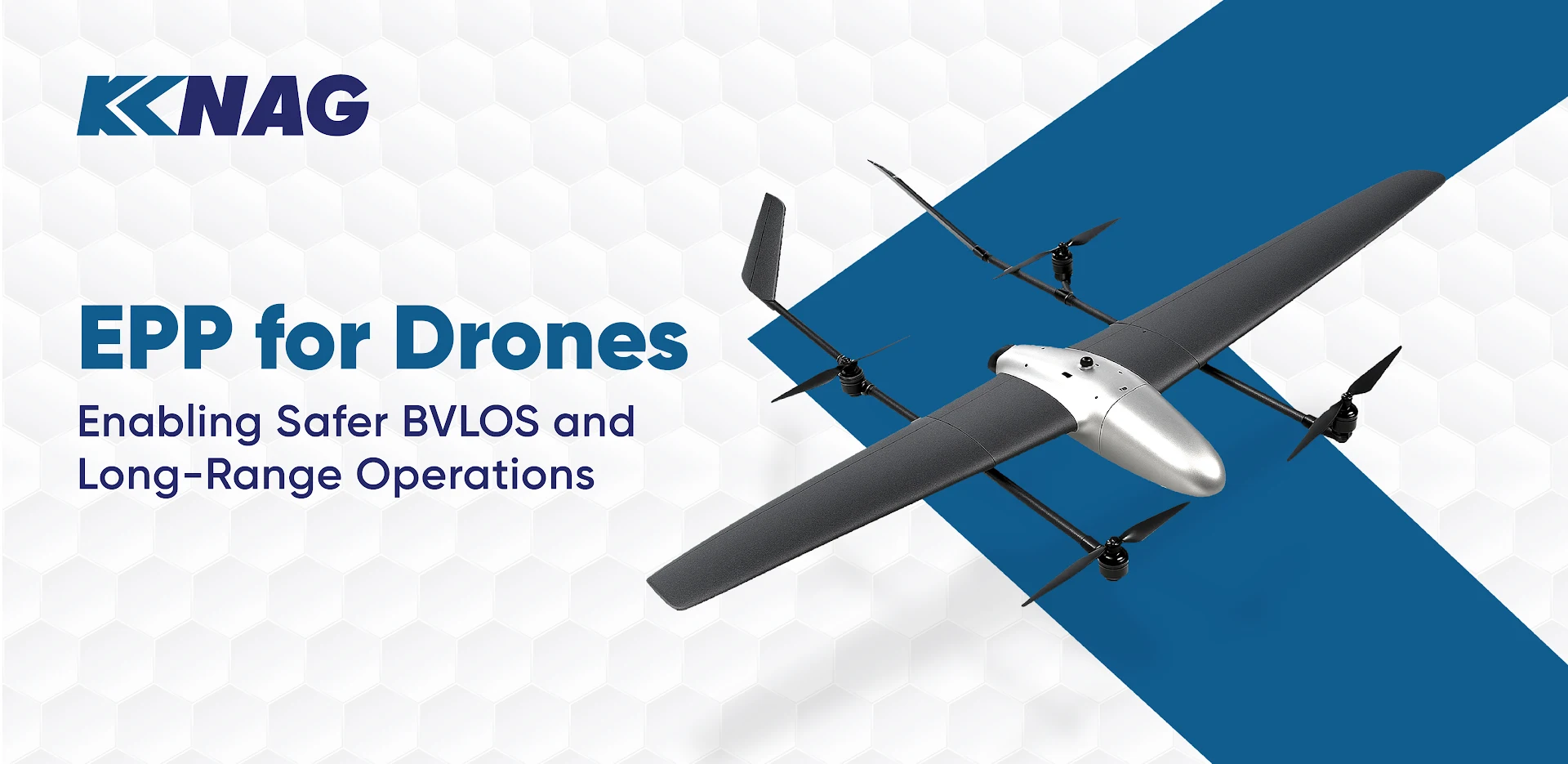
As drone technology advances, applications are expanding far beyond aerial photography. Across Europe and the United States, drones are increasingly being deployed for logistics, infrastructure inspection, agriculture, emergency response and surveillance. Many of these operations involve Beyond Visual Line of Sight (BVLOS)flights, enabling drones to travel longer distances with minimal human intervention. As missions become longer and more autonomous, manufacturers must consider not only flight performance but also component durability, protective packaging reliability and maintenance efficiency. This is where expanded polypropylene foam plays a valuable role. In this blog, we will explore how EPP supports safer BVLOS and long-range drone operations by enhancing structural performance, payload protection and transit reliability.
Table of Contents
- 01.BVLOS Expansion Driving the Need for Advanced Drone Materials
- 02. Why Lightweight Materials Matter in Long-Range Drone Operations
- 03. How EPP Supports Drone Performance and Protection
- 04. K. K. Nag’s Customised EPP Drone Packaging Solutions
- 05. Why Reusable EPP Packaging is Becoming Essential for Drone Logistics
- 06. In-House Tooling, Manufacturing Capability and Case Analysis
- 07. Conclusion
BVLOS Expansion Driving the Need for Advanced Drone Materials
According to the European Union Aviation Safety Agency (EASA), BVLOS operations are becoming increasingly important for industrial applications such as powerline inspections, pipeline monitoring, precision agriculture and medical logistics.
Similarly, the Federal Aviation Administration (FAA) in the United States continues to expand BVLOS approvals through regulatory exemptions, waiver programmes and new rulemaking initiatives. These developments are creating new opportunities across sectors including:
- Industrial asset inspection
- Logistics and last-mile delivery
- Border and infrastructure surveillance
- Emergency response
- Mining and energy operations
- Agriculture and environmental monitoring
Such applications involve longer flight paths and more demanding operating environments, increasing the need for lightweight drone components, durable components and reliable transit protection. Expanded polypropylene foam (EPP) helps address these requirements by combining lightweight performance with excellent impact absorption. From structural components to EPP protective packaging,, EPP supports payload protection and safer handling across drone manufacturing, logistics and field deployment.
Why Lightweight Materials Matter in Long-Range Drone Operations
Every gram matters in long-range drone operations.
Reducing component weight allows drones to improve flight endurance, optimise payload capacity and reduce overall energy consumption. Lightweight construction also places less stress on propulsion systems, helping to improve operational efficiency.
This is why lightweight drone components have become an important focus during the drone design process.
How EPP Supports Drone Performance and Protection
EPP for drones offers an effective combination of lightweight construction and impact resistance.
Expanded Polypropylene Foam has a closed-cell foam structure that absorbs impact energy while recovering its original shape after compression. This allows it to protect sensitive equipment without adding unnecessary weight.
For drone manufacturers, EPP can support a variety of applications including:
Structural Components
Selected lightweight drone components such as protective housings, covers and internal support structures benefit from EPP’s high strength-to-weight ratio.
Payload Protection
Industrial drones frequently carry expensive payloads including cameras, LiDAR systems, thermal imaging devices and inspection sensors. EPP cushioning helps reduce shock transmission during handling and transport.
Landing Protection
Impact-resistant EPP structures can help absorb landing forces, particularly during repeated field operations or emergency landings.
Transit Protection
Before reaching operational sites, drones often travel long distances between manufacturing facilities, service centres and customers. EPP protective packaging helps minimise damage caused by vibration, shock and handling during transport.
Together, these applications make EPP for drones valuable throughout both manufacturing and operational stages.
To support advanced BVLOS platforms, K. K. Nag designs and manufactures specialised, flight-ready lightweight drone components that are integrated directly into the aircraft body. These are not generic foam blocks; they are high-density, custom-engineered elements moulded to strict structural tolerances:
- Battery Holders: Form-fitting structural thermal nests that isolate heavy lithium-polymer battery packs, protecting them from structural vibrations and preventing thermal runaway during extended BVLOS operations.
- Payload Inserts: Custom internal chassis components engineered to cushion expensive internal circuit stacks, power distribution boards and onboard processing modules.
- Protective Housings and Structural Inserts: Aerodynamic external covers and internal chassis ribs that provide high strength-to-weight ratios, shielding internal electronics from dust and moisture while defining the aircraft’s physical profile.
- Landing Pads: Impact-resilient undercarriage cushions designed to absorb residual landing forces during field operations, protecting lower-mounted systems.
- Sensor Protection: Deeply recessed internal compartments engineered to isolate sensitive optical cameras, LiDAR systems, thermal imaging devices and flight sensors from mechanical shocks.
K. K. Nag’s Customised EPP Drone Packaging Solutions
Before reaching operational sites, industrial platforms must endure thousands of kilometres of regional or international transit. Generic cases or cardboard containers frequently fail to protect highly sensitive internal alignments, leading to unexpected field calibration errors.
K. K. Nag addresses this challenge by providing comprehensive, engineered industrial drone packaging ecosystems. Our drone transit packaging configurations are built from high-density EPP, creating structural transportation matrices that serve as dedicated drone packaging solutions for large fleet deployments.
These custom-moulded transport systems feature multi-layered layouts that house the entire operational footprint of an enterprise platform. By utilising precise tool room design, K. K. Nag crafts custom-contoured UAV packaging that features discrete, non-abrasive cavities for individual sub-assemblies. This level of specialisation ensures that separate components remain completely secure, preventing internal movement and ensuring out-of-the-box system readiness upon arrival at the operational site.
Why Reusable EPP Packaging is Becoming Essential for Drone Logistics
As commercial drone fleets continue to grow, packaging is becoming an increasingly important part of operational efficiency.
Fleet operators regularly transport complete drones, spare batteries, payload modules and replacement components between multiple locations. Disposable packaging often struggles to provide the durability required for repeated logistics cycles.
This is where drone packaging solutions built from Expanded Polypropylene Foam offer significant advantages.
Well-designed drone component packaging provides:
- dedicated cavities for each component
- reduced movement during transport
- protection against vibration and accidental impact
- improved stacking stability
- easier inventory management
- repeated reuse across multiple logistics cycles
Returnable EPP protective packaging also supports sustainability initiatives by reducing packaging waste and lowering replacement costs over time.
For organisations managing large drone fleets, reusable electronics packaging helps improve both operational consistency and lifecycle economics.
In-House Tooling, Manufacturing Capability and Case Analysis
Developing high-tolerance lightweight drone components and robust drone transit packaging requires a manufacturer with advanced production infrastructure and structured engineering protocols. K. K. Nag operates a comprehensive, one-stop custom tool room and manufacturing setup that handles every step from early product design up to final technical component approval.
Our in-house capabilities include:
- Advanced Design Engineering: Modifying parting lines, ejector placements and integrated edge profiles during the initial feasibility review to eliminate tooling risks before metal is cut.
- Precision In-House Tool Room: Leveraging Vertical Machining Centres (VMC) and Computer-Aided Manufacturing (CAM) tooling support to cut complex aluminium patterns with absolute accuracy.
- Rigorous Tool Sampling: Subjecting every new mould to strict physical sampling and multi-point CMM inspections to secure complete dimensional compliance before high-volume production.
Customer Application Case Study: Flight-Ready Innovation
In 2023, K. K. Nag Private Limited was approached by a global drone organisation to design seven critical Expanded Polypropylene (EPP) components. Due to our proven expertise in handling intricate, complex-shaped parts, we were chosen to take on a high-stakes engineering challenge: successfully design and mould the most critical flight component, the EPP nose foam, before being awarded the contract for the remaining six pieces.
The project presented major technical hurdles. The EPP nose foam demanded exceptionally high precision and incredibly strict tolerances that were widely considered difficult to achieve within the constraints of commercial EPP moulding. In fact, a reputed raw material supplier from Japan explicitly expressed doubts regarding the structural feasibility of moulding this specific component to the client’s demanding specifications due to a design complexity featuring intricate undercuts and complex engineering profiles.
To solve these hidden risks during the tool validation phase, our R&D team embarked on an intensive development lifecycle. Within a tight eight-week window, K. K. Nag successfully engineered a solution:
- Designed a custom mould featuring five operating cylinders, positioning four cylinders strategically at sharp angles to handle the geometric undercuts and one dedicated cylinder for the profile layout.
- Integrated a high-efficiency air booster directly into the mould assembly and introduced a specialised vent valve to fully refine the material filling process.
- Conducted six intensive iterative engineering trials, executing systematic adjustments and tool room optimisations to completely satisfy the stringent target tolerances.
This engineering persistence yielded total success. K. K. Nag successfully moulded the EPP nose foam to the customer’s exact specifications. Upon formal component approval, the global drone organisation awarded K. K. Nag the manufacturing contract for all six remaining EPP components, cementing our role as a trusted partner for advanced, complex polymer solutions in high-performance aerospace applications.
Conclusion
The growth of BVLOS drone logistics across Europe and the United States is changing how drones are designed, transported and maintained. Longer missions and increasingly sophisticated payloads require lightweight materials that also provide dependable protection.
From lightweight drone componentsto EPP protective packaging , Expanded Polypropylene Foam helps address these requirements through impact resistance, low weight and long service life. Combined with customised drone packaging solutions, EPP supports manufacturers and fleet operators in improving product protection, operational efficiency and repeatable logistics performance.
As drone technology continues to evolve, engineered EPP solutions will remain an important part of building safer, more reliable and sustainable drone ecosystems.

Featured Blogs
Rotomoulded Septic Tanks and Bio-Toilets for Modern Sanitation
Rotomoulded septic tanks and bio-toilets are seamless, polymer-based sanitation systems engineered through rotational moulding. Used across rural, urban and industrial sites, they replace concrete structures by offering lightweight [...]
How EPP Improves Automotive Acoustics and NVH Performance
Summary: EPP automotive components help manage automotive NVH by reducing vibration transfer, controlling panel resonance, filling cavities and preventing buzz, squeak and rattle. As a lightweight material, EPP [...]
How to Calculate Savings from Switching to Reusable Polymer Solutions
Many businesses compare a disposable box with reusable packaging by looking only at the price of one unit. A corrugated box may appear cheaper than an EPP container [...]
How K. K. Nag Builds Circularity into Polymer Manufacturing
The way manufacturers evaluate polymer products is changing. The question is no longer limited to whether a material can be recycled. Businesses are also considering how long [...]
Get in Touch with Us
We look forward to connecting with you!


