
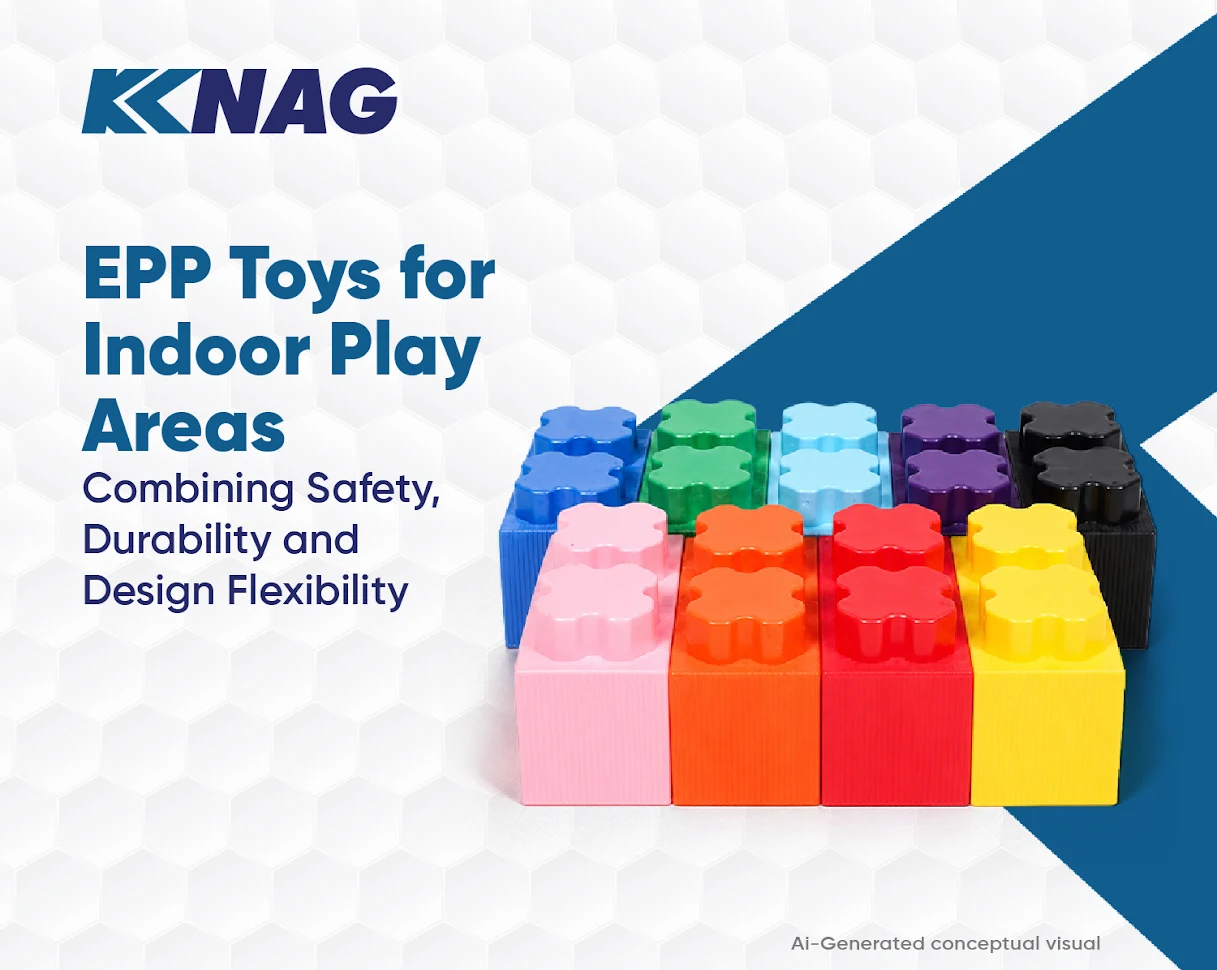
EPP Toys for Indoor Play Areas: Combining Safety, Durability and Design Flexibility
Indoor play spaces have evolved far beyond simple playrooms with a handful of toys. Today’s schools, daycare centres, activity zones, children’s museums and family entertainment centres are creating interactive environments that encourage movement, creativity and collaborative learning. A toy gets stacked and kicked over fifty times before home time. Multiply that by every child who walks through an activity centre in a single day and it becomes clear why so much play equipment ends up cracked, flattened or discarded within a year.
This is precisely the problem that has pushed schools, activity centres, malls and recreational facilities to rethink what their play equipment is made of. Basic foam mats sag and tear, while rigid plastic toys can crack and cause injuries during active play. Expanded Polypropylene (EPP) addresses these challenges by combining cushioning with structural strength for indoor play area toys. Its lightweight construction also allows toys and play modules to be easily assembled, disassembled and rearranged into different play configurations. This makes storage and transportation easier for facility operators while encouraging children to explore, build, solve problems and develop motor skills through interactive play.
Table of Contents
What Makes EPP Ideal for Children’s Play Equipment?
EPP combines excellent mechanical strength with cushioning properties, making it well suited for educational and recreational applications. EPP is a closed-cell bead foam known for its resilience, impact resistance and lightweight construction. Unlike conventional foams that gradually compress or tear, EPP recovers its original shape even after repeated loading.
These properties enable manufacturers to develop durable indoor play products that retain their performance, appearance and structural integrity even under continuous daily use.
Key material advantages include:
- Impact Resistant: The closed-cell structure compresses when a child falls or leans on it, then returns to its original shape, again and again, without going flat.
- Customisable: The same base material can be moulded soft for a tumble mat or firmer for a load-bearing climbing block, depending on what the part needs to do.
- Moisture and Dust Resistant: Spills, sweat and humidity don’t get absorbed the way they would in open-cell foam, which keeps play equipment cleaner and fresher for longer.
- Durability: EPP doesn’t crumble, flake or lose its shape the way other foams do, even after thousands of compressions.
These material characteristics help manufacturers reduce product failures, improve product life and deliver consistent quality across high-volume production.
Creating Safer Indoor Play Experiences with EPP
Safety remains the primary concern in every indoor play facility. Falls, collisions and accidental impacts are inevitable during active play, making equipment design a critical factor.
Superior Shock Absorption
One of the biggest advantages of EPP toys for indoor play is their ability to absorb impact energy. Instead of transferring force directly to the child, the material compresses and distributes energy, helping reduce the severity of accidental bumps and falls.
This makes EPP particularly suitable for:
- Toddler play zones
- Preschool classrooms
- Indoor climbing areas
- Sensory play environments
- Activity centres
Rounded and Child-Friendly Designs
EPP can minimise injury risks while maintaining structural stability.
Its excellent mouldability also allows manufacturers to create customised shapes, into smooth, rounded shapes without sharp corners. Whether designing tunnels, stepping stones, balance beams or climbing blocks, manufacturers can create soft contours that minimise sizes and geometries for different age groups and play environments.
Chemical Resistance
Expanded Polypropylene naturally resists many oils, greases and commonly encountered chemicals, helping components maintain their structural integrity even in demanding environments. This makes EPP suitable for products that require long-term durability and repeated handling.
Washability and Hygiene
The closed-cell structure of EPP does not readily absorb moisture, making components easy to wipe clean and maintain. This is particularly beneficial for indoor play equipment used in schools, daycare centres and recreational facilities where regular cleaning is essential.
Flexible Material Grades for Different Play Applications
Depending on the application and material selection, EPP components can also be manufactured using:
- Multiple EPP density grades for varying cushioning and structural requirements
- Food-safe and child-safe material grades
- Fire-retardant EPP grades for specialised environments
- UV-resistant grades for applications exposed to sunlight
- Chemical-resistant formulations for demanding applications
Applications of EPP in Indoor Play Areas
The versatility of Expanded Polypropylene enables manufacturers to create a wide variety of educational and recreational products.
Common applications can include:
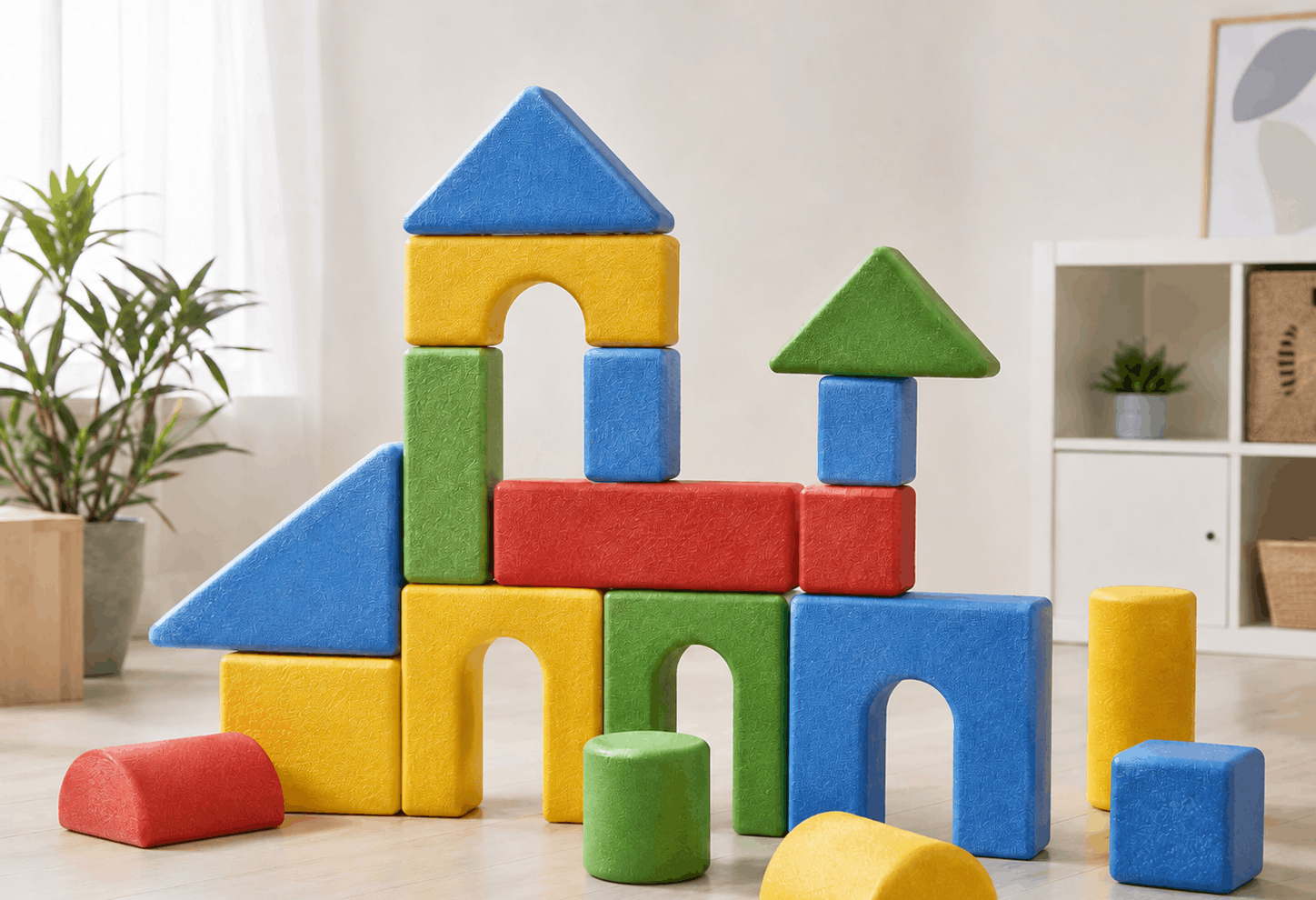
1. Modular Play Blocks: EPP play blocks support imaginative construction activities while helping children develop spatial awareness, coordination and teamwork.
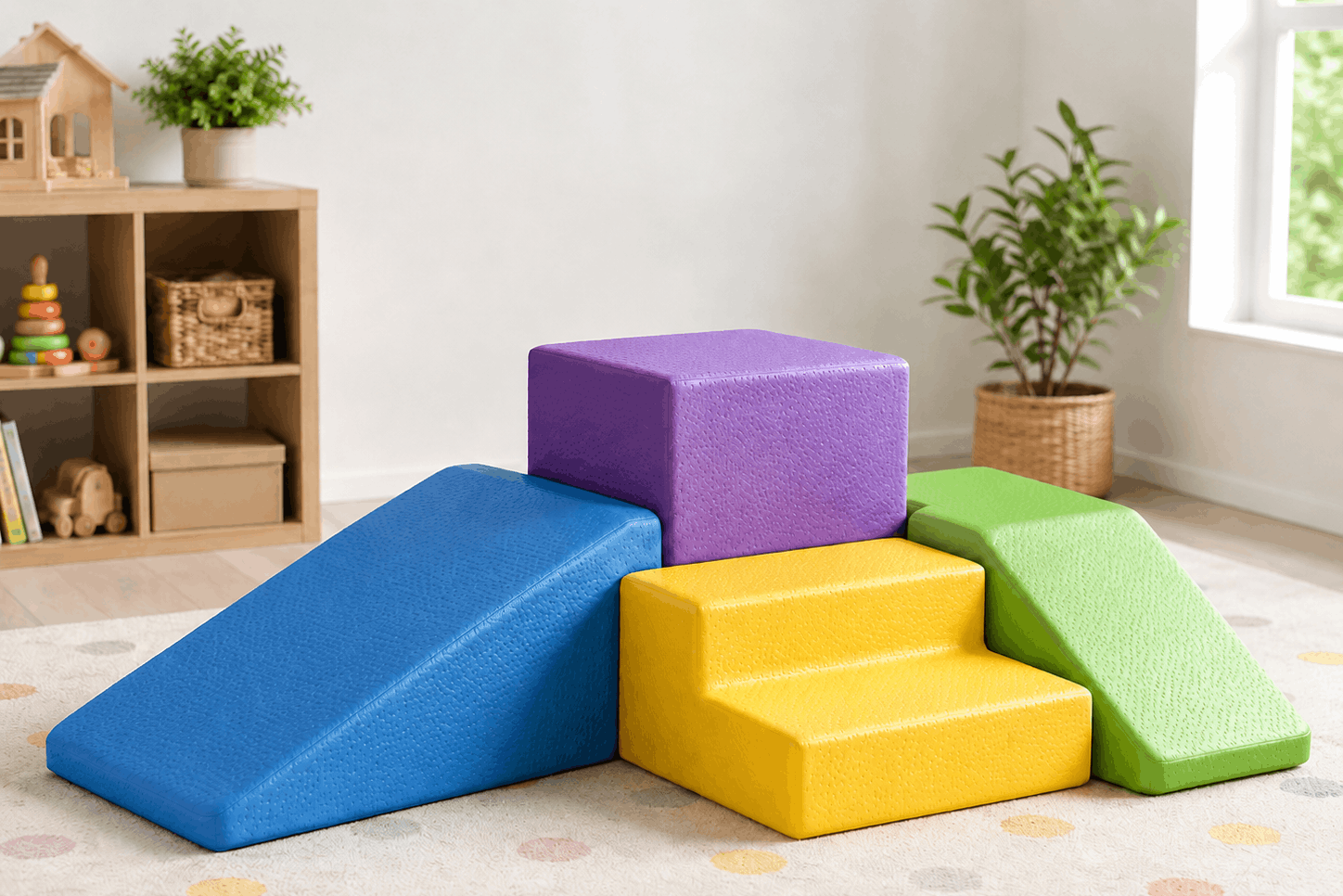
2. Soft Climbing Structures: Climbing cubes, ramps, wedges and platforms encourage gross motor development while providing cushioned landings.
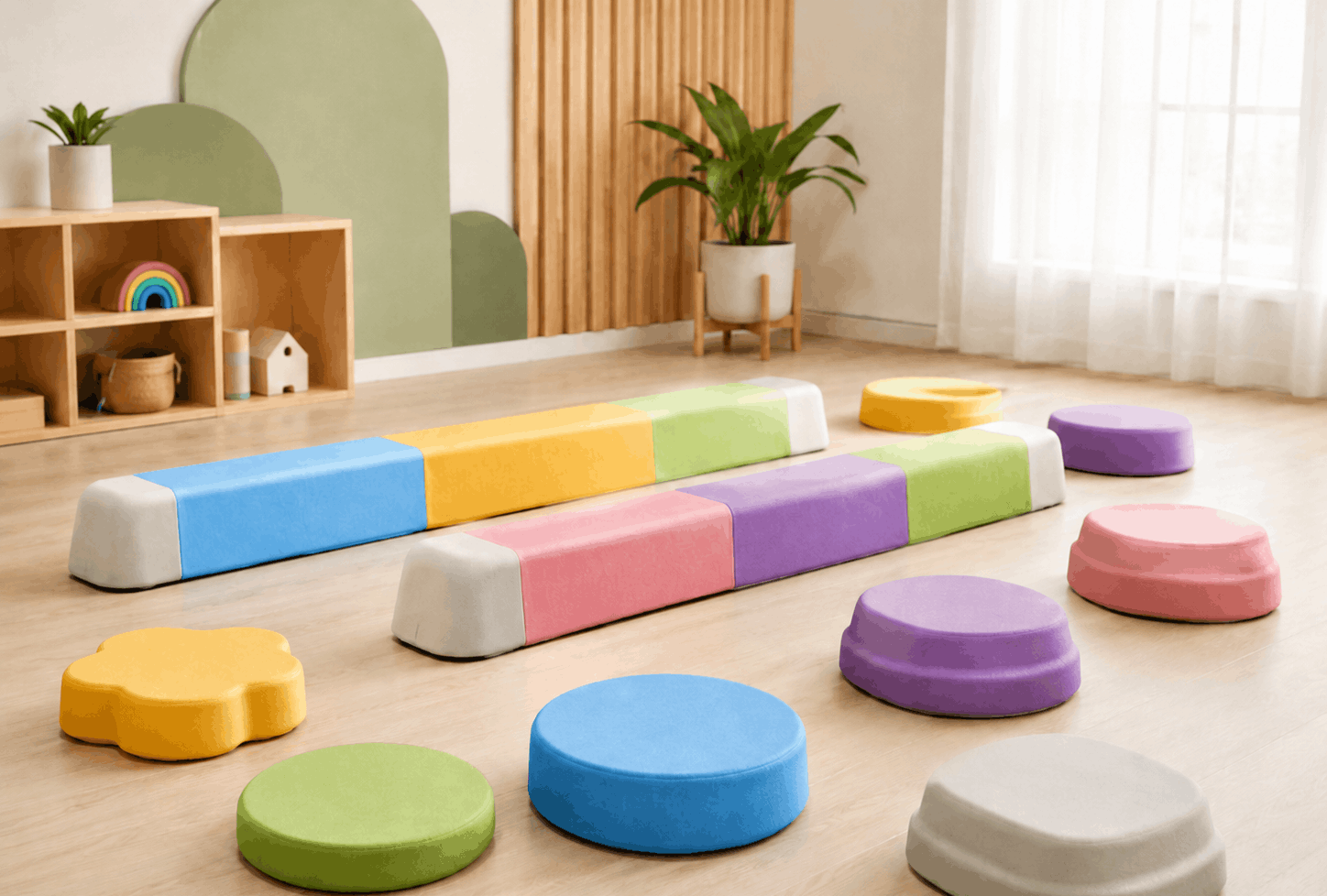
3. Balance and Movement Equipment: Stepping stones, balance beams and movement trails promote physical coordination and confidence in young children.
4. Educational Activity Modules: Alphabet blocks, geometric shapes, colour recognition toys and interactive learning elements combine education with physical engagement.
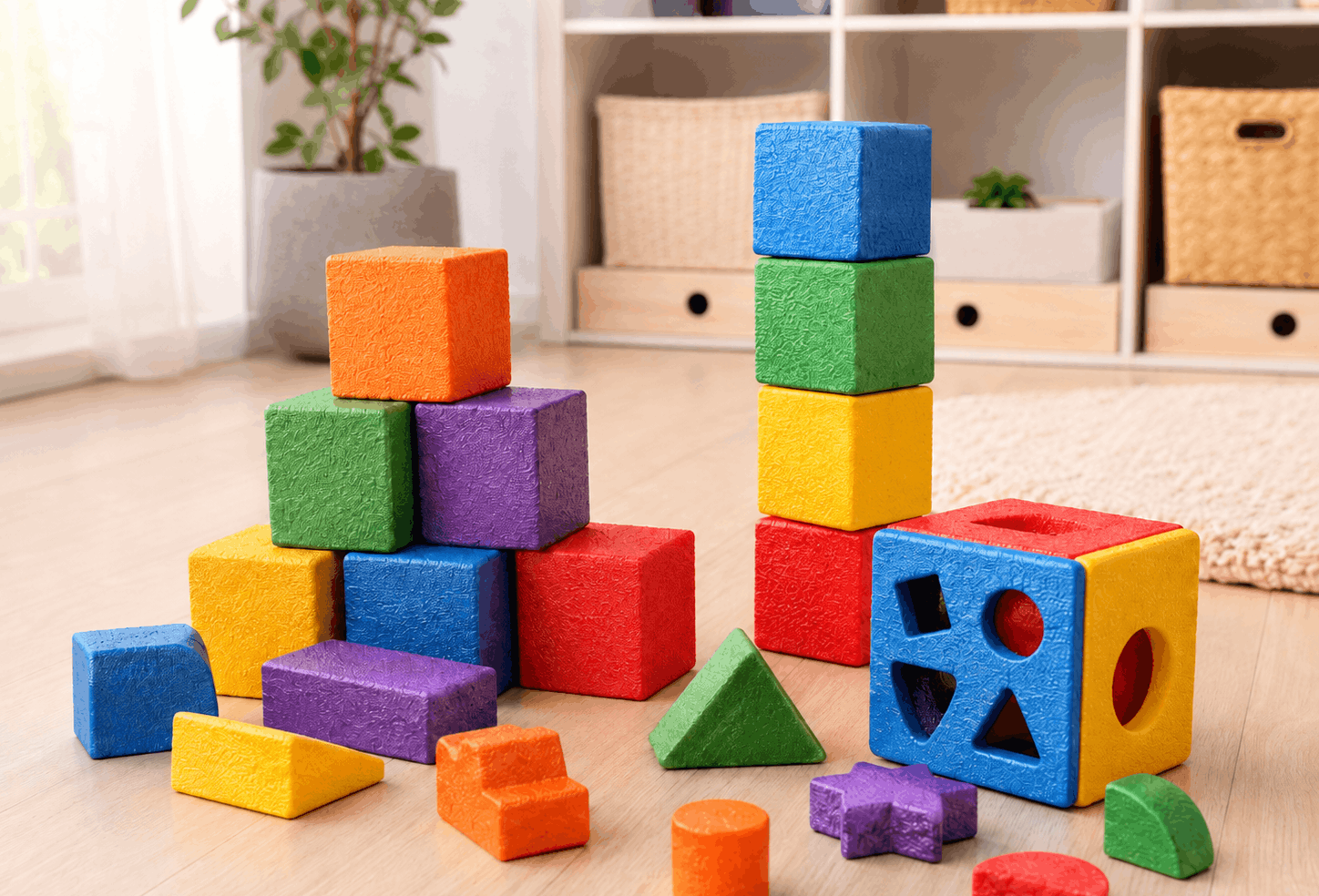
5. Role-Play and Creative Structures: EPP can also be moulded into tunnels, play houses, vehicles and themed play elements that stimulate imaginative play.
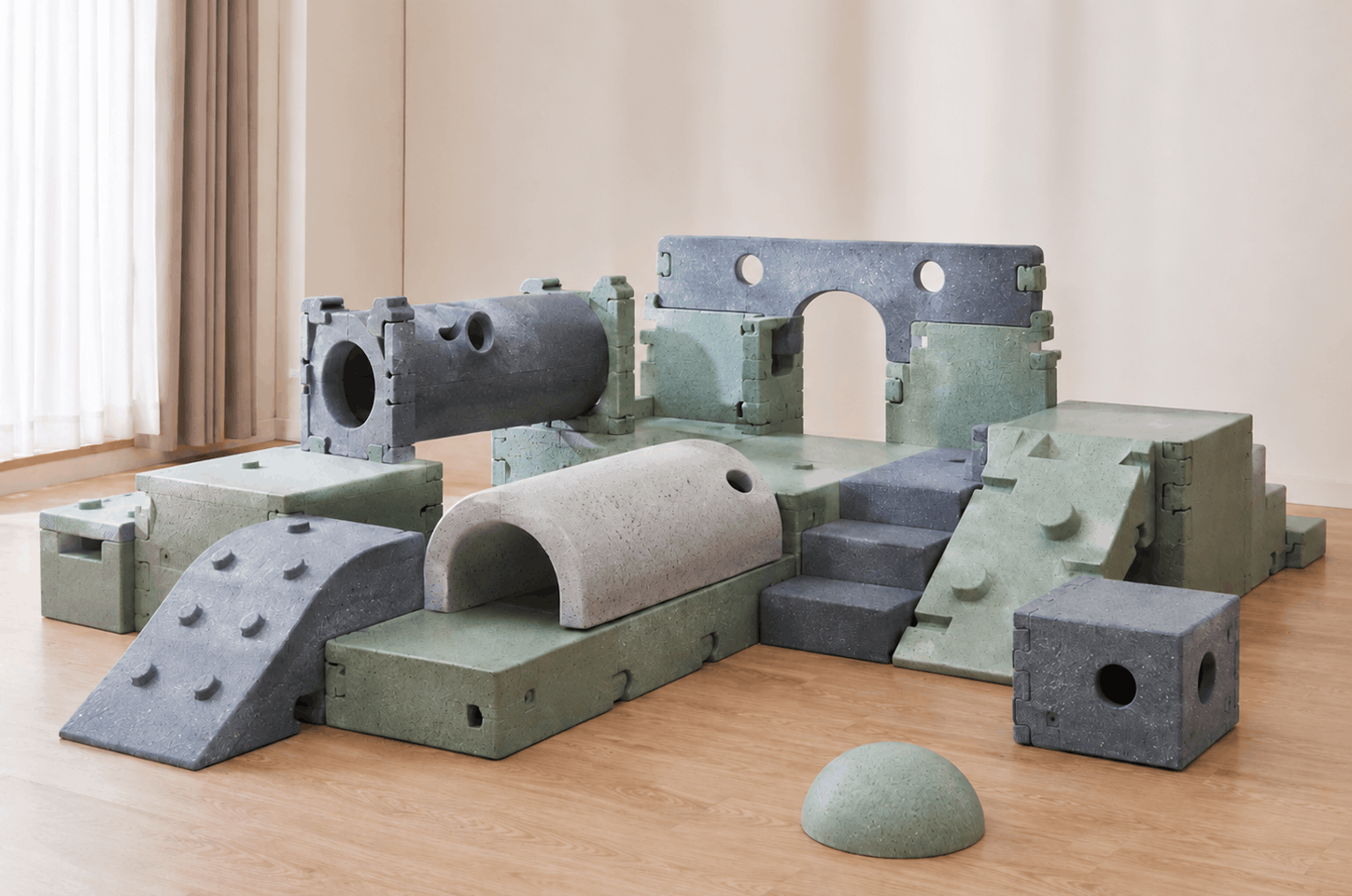
K. K. Nag helps customise EPP components for these indoor play applications.
Each product can be engineered with different densities, colours and performance characteristics based on customer requirements.
Supporting Sustainable Indoor Play Solutions
As educational institutions and recreational facilities increasingly consider environmental responsibility, material selection also plays an important role.
Expanded Polypropylene is recyclable and offers a long product life, reducing the need for frequent replacement. Its durability helps minimise material waste while supporting more sustainable product lifecycles.
Safety Standards and Material Compliance
Safety and regulatory compliance are essential when developing EPP toys for children’s indoor play areas. In India, toys intended for children below 14 years must comply with the Bureau of Indian Standards (BIS) requirements under the Toys (Quality Control) Order, 2020.
Since compliance applies to the finished toy rather than the raw material alone, factors such as the EPP grade, additives, coatings, inks and the overall manufacturing process all contribute to meeting the required safety standards.
K. K. Nag works with customers to manufacture EPP components using material grades suited to their product specifications and regulatory requirements.
Our engineering team can support customer-specific compliance requirements by manufacturing products using material grades suitable for applicable toy safety and product standards, depending on project specifications.
Conclusion
Creating engaging indoor play environments requires more than colourful equipment. The right material must support child safety, withstand years of active use and provide designers with the flexibility to create dynamic, educational spaces.
At K. K. Nag, we bring over 30 years of expertise in EPP moulding to support manufacturers, OEMs and product innovators in developing high-quality indoor play solutions. Our end-to-end capabilities include in-house mould development, custom design support, prototype development, value engineering and high-volume manufacturing to help accelerate product development while maintaining consistent quality. We also offer custom colours and densities to meet specific performance, branding and design requirements, enabling businesses to create innovative, safe and durable play products for modern indoor environments.

Featured Blogs
Rotomoulded Septic Tanks and Bio-Toilets for Modern Sanitation
Rotomoulded septic tanks and bio-toilets are seamless, polymer-based sanitation systems engineered through rotational moulding. Used across rural, urban and industrial sites, they replace concrete structures by offering lightweight [...]
How EPP Improves Automotive Acoustics and NVH Performance
Summary: EPP automotive components help manage automotive NVH by reducing vibration transfer, controlling panel resonance, filling cavities and preventing buzz, squeak and rattle. As a lightweight material, EPP [...]
How to Calculate Savings from Switching to Reusable Polymer Solutions
Many businesses compare a disposable box with reusable packaging by looking only at the price of one unit. A corrugated box may appear cheaper than an EPP container [...]
How K. K. Nag Builds Circularity into Polymer Manufacturing
The way manufacturers evaluate polymer products is changing. The question is no longer limited to whether a material can be recycled. Businesses are also considering how long [...]
Get in Touch with Us
We look forward to connecting with you!


