
EPS Insulation in Refrigerators, Water Coolers and Air Conditioners: Enhancing Energy Savings
Rising electricity costs and increasing awareness of environmental impact have placed energy efficiency at the centre of appliance design. Refrigerators, water coolers and geysers operate for long durations and often run continuously.
Table of Contents
- 01. Importance of energy-efficient appliances
- 02. What is EPS and why is it used for insulation?
- 03. How EPS enhances energy efficiency in appliances
- 04. EPS insulation in refrigerators
- 05. EPS insulation for water coolers
- 06. EPS insulation in air conditioners (ACs)
- 07. Sustainability and environmental impact
- 08. Design considerations for optimal performance
- 09. Conclusion
In fact, refrigerators account for up to 15–20% of household electricity consumption, while water heating can contribute nearly 20–25% of total energy use. This makes insulation performance a critical factor in reducing long-term energy costs. Even small improvements in insulation performance can therefore translate into meaningful reductions in household energy consumption.
Insulation plays a decisive role in limiting unwanted heat transfer. When insulation performs effectively, compressors cycle less frequently, heaters switch on for shorter durations and internal temperatures remain stable with lower energy input. EPS insulation for appliances has emerged as one of the practical solutions used to improve thermal performance while maintaining cost balance and structural integrity.
Importance of energy-efficient appliances
Household appliances account for a significant share of residential electricity consumption. Refrigerators operate around the clock, water coolers maintain chilled water throughout the day and geysers repeatedly heat stored water. In each case, energy is lost when heat moves across the appliance wall from warm to cold or vice versa.
Energy-efficient appliance insulation reduces this transfer. By lowering thermal conductivity and controlling air leakage, insulation directly reduces standby losses in geysers and heat gain in refrigeration systems. Over the lifetime of an appliance, these incremental savings can be substantial.
The effectiveness of insulation depends not only on material choice but also on thickness, density, sealing and overall design. A well-designed insulation system ensures that heat transfer is minimised across the entire cabinet surface rather than just through the core material.
What is EPS and why is it used for insulation?
Expanded polystyrene is a closed-cell bead foam composed primarily of trapped air within a lightweight polymer matrix. Air is a poor conductor of heat, which gives EPS its insulating capability. Typical thermal conductivity values for EPS fall in the range of approximately 0.030 to 0.038 W per metre kelvin, depending on grade and density.
EPS offers several practical advantages:
- Low density with good compressive strength
- Dimensional stability
- Resistance to moisture absorption
- Ease of moulding into complex shapes
- Cost effectiveness in bulk production
These characteristics make EPS thermal insulation benefits attractive in appliance components where structural support and thermal resistance are both required.
How EPS enhances energy efficiency in appliances
Heat transfer occurs through conduction, convection and radiation. EPS primarily reduces conductive heat flow because of its cellular structure. The trapped air pockets limit molecular heat movement through the material, lowering overall thermal conductivity.
In refrigeration appliances, reduced heat ingress decreases compressor runtime. In water heating appliances, reducing heat loss lowers standby power consumption. The overall impact is improved system efficiency and lower energy demand.
To achieve target performance, designers calculate the required thermal resistance and determine the appropriate thickness. Since EPS has a slightly higher thermal conductivity than rigid polyurethane foam, it may require greater thickness to achieve the same insulation level. When space constraints allow for adequate panel depth, EPS can meet efficiency targets effectively.
EPS insulation in refrigerators
Domestic refrigerators are typically insulated using injected polyurethane foam because it offers high thermal resistance per millimetre and bonds directly to metal skins.
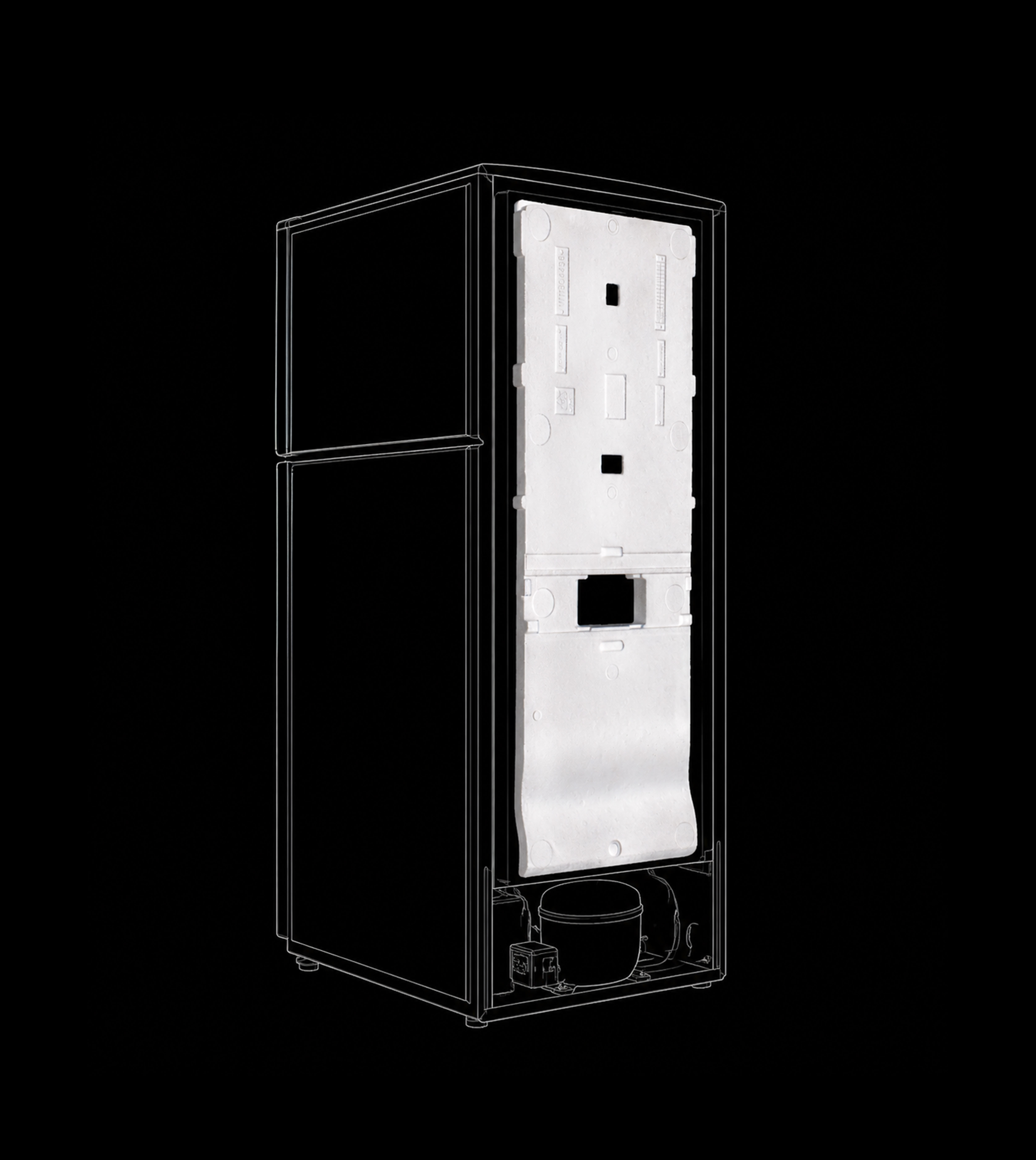
EPS is used in supporting insulation components and specific designs, while polyurethane foam remains the primary insulation in most modern refrigerators.
EPS is commonly used in:
- Transport packaging that protects refrigeration units before installation
- Insulated liners and compartment separators
Modular refrigeration panels in larger systems. For refrigeration systems, careful attention must be given to sealing around door gaskets, evaporator housings and joints. Insulation performance can be compromised if convective air leakage paths exist. Proper design ensures that the insulation layer functions as intended across the entire enclosure.
EPS insulation for water coolers
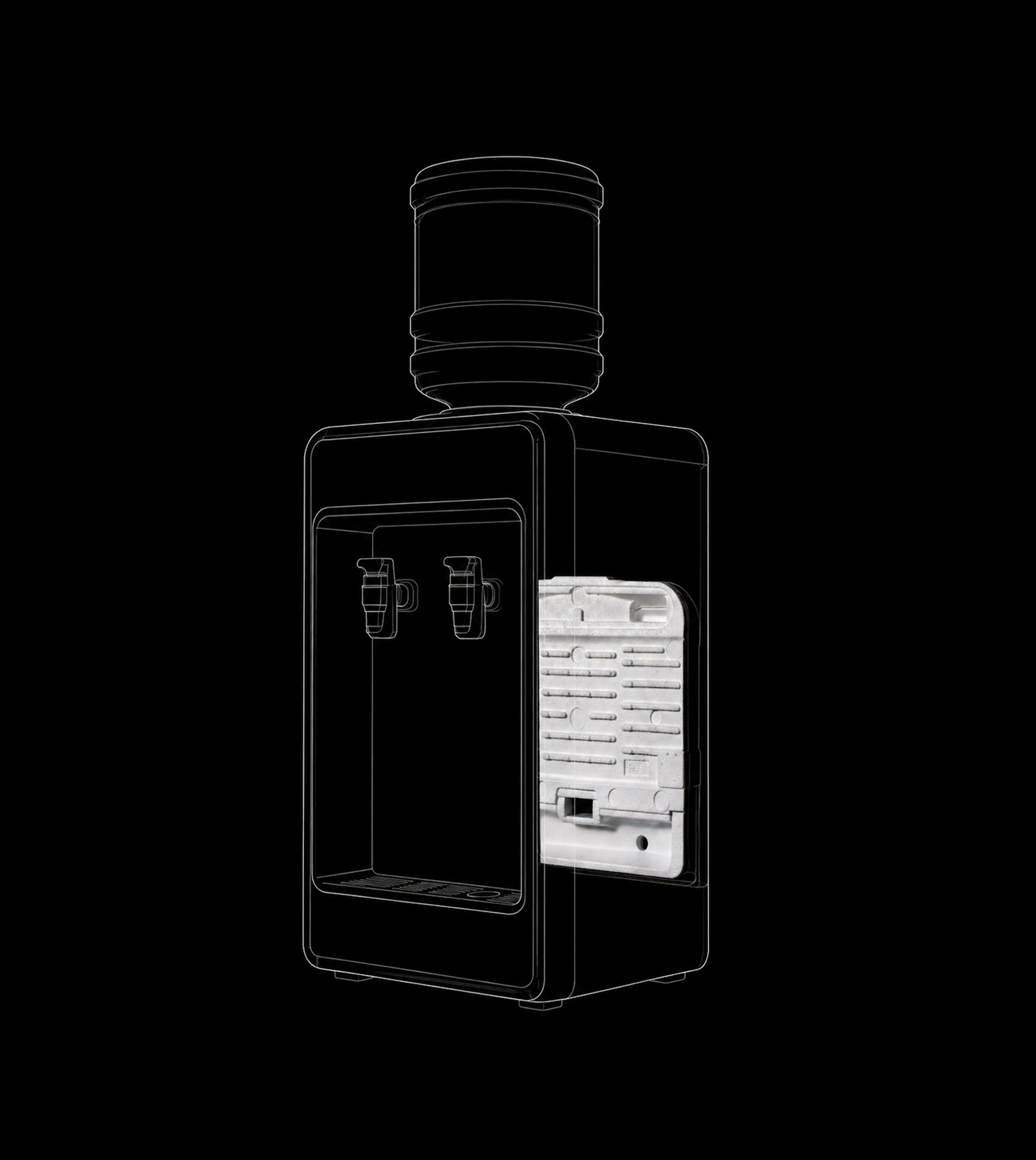
Water coolers maintain chilled water within insulated tanks. Heat gain from the surrounding environment increases the compressor workload. EPS insulation for water coolers reduces this heat gain and helps maintain a stable internal temperature.
In many designs, EPS is used as:
- Tank surrounds
- Base insulation pads
- Outer shell insulation layers
The material’s resistance to moisture is valuable in water dispensing systems where condensation may occur. Dimensional stability ensures consistent performance over repeated cooling cycles.
Reducing thermal gain lowers compressor cycling frequency, which improves energy efficiency and extends equipment life. In commercial water coolers, operating savings accumulate over extended use.
EPS insulation in air conditioners (ACs)
Air conditioners maintain indoor comfort by transferring heat between indoor and outdoor environments. Energy losses occur not only through the refrigeration cycle but also through components where unwanted heat exchange with the surrounding environment reduces system efficiency. In ducted and central systems, conditioned air can gain or lose heat while passing through unconditioned spaces such as ceiling cavities and wall chases.
EPS is used in AC systems as:
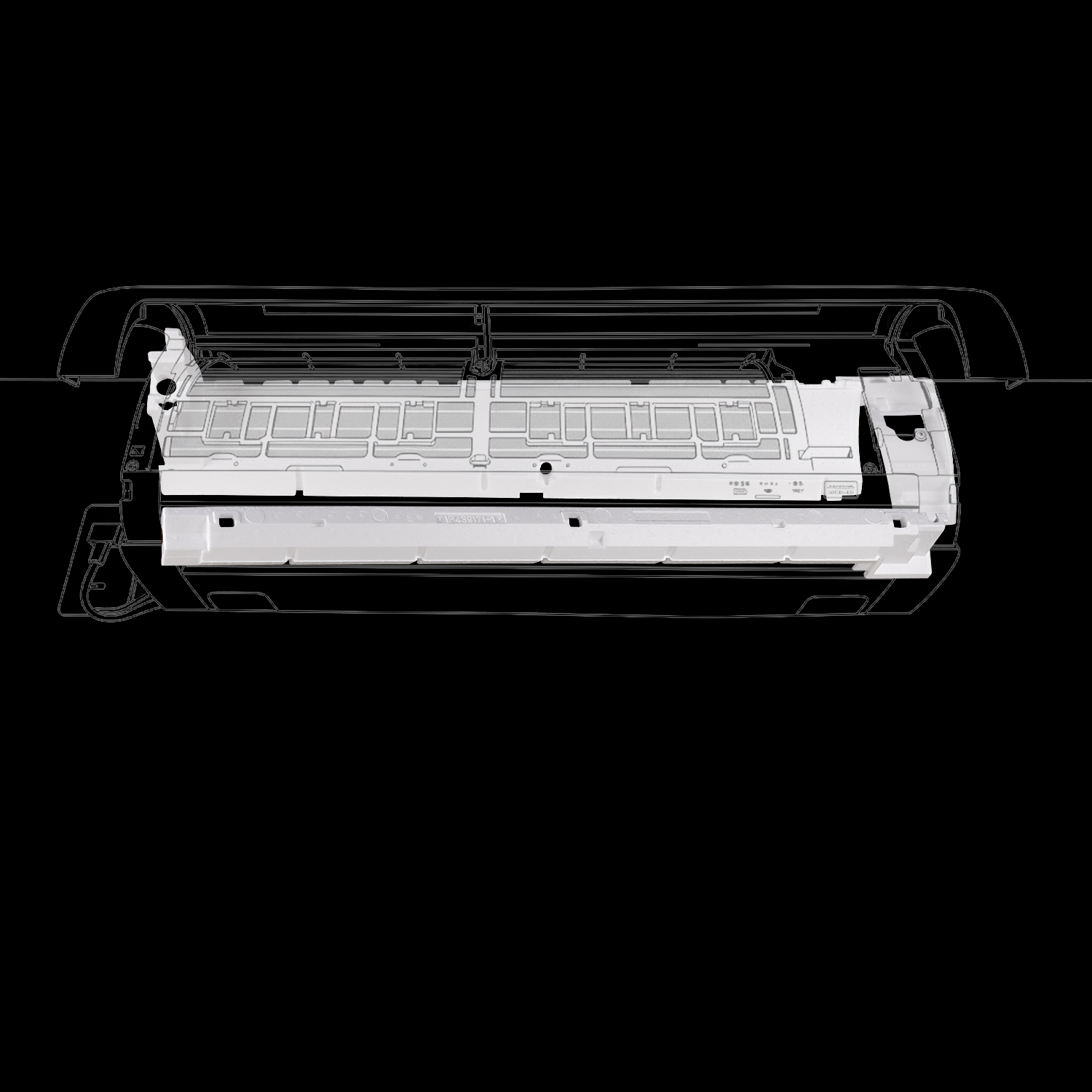
- Internal air ducts in window and room AC units, where moulded EPS channels direct conditioned airflow and limit heat exchange within the unit
- Duct insulation in ducted and central systems to reduce heat gain or loss across unconditioned spaces
- Moulded housing components in air handler units, helping maintain consistent temperatures within the unit
In these systems, proper insulation across joints, bends and penetrations is important, since gaps in coverage create localised heat transfer paths that reduce overall system efficiency regardless of how well the core components perform.
Sustainability and environmental impact
EPS is lightweight and contains a high proportion of air, which reduces raw material usage per unit of insulation value. Lower weight also contributes to reduced transport emissions during distribution.
The material is technically recyclable and can be reprocessed into new products when collection systems are available. Reusability in protective packaging further improves lifecycle performance. Environmental outcomes depend on responsible collection, recycling infrastructure and proper disposal practices.
When evaluating sustainability, designers should consider service life, reuse potential and end-of-life recovery rather than focusing solely on material type.
Design considerations for optimal performance
To maximise energy savings from EPS insulation for appliances, the following factors should be considered:
- Accurate thermal calculations based on the target U-value
- Appropriate density selection for load-bearing requirements
- Effective sealing at joints and penetrationst
- Compliance with relevant fire and safety regulations
- Use of flame-retardant EPS grades to comply with fire safety standards
Material substitution should never be done on a direct thickness equivalence basis. Each appliance requires an engineered evaluation to ensure performance targets are met.
To maximise insulation performance, engineers should focus on eliminating thermal bridges, ensuring continuous insulation coverage and optimising joint sealing. In some cases, EPS can also be combined with other materials to enhance overall system efficiency.
Conclusion
Energy efficiency in refrigerators, water coolers and geysers depends heavily on insulation design. EPS insulation for appliances provides a practical balance of thermal performance, mechanical strength and cost effectiveness when properly engineered.
EPS insulation in refrigerators supports thermal separation in appropriate cabinet designs. EPS insulation for water coolers reduces compressor workload and improves operational efficiency. EPS insulation in geysers lowers standby heat losses and contributes to reduced energy consumption.
By combining correct material selection with thoughtful design and manufacturing precision, expanded polystyrene manufacturers can enhance appliance efficiency while maintaining durability and structural integrity.
If you are designing energy-efficient appliances and evaluating insulation materials, our engineering team can support you with custom EPS moulding, thermal optimisation and application-specific solutions tailored to your product requirements.

Featured Blogs

Rotomoulded Septic Tanks and Bio-Toilets for Modern Sanitation
Rotomoulded septic tanks and bio-toilets are seamless, polymer-based sanitation systems engineered through rotational moulding. Used across rural, urban and industrial sites, they replace concrete structures by offering lightweight [...]
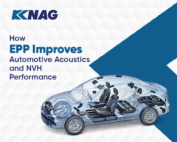
How EPP Improves Automotive Acoustics and NVH Performance
Summary: EPP automotive components help manage automotive NVH by reducing vibration transfer, controlling panel resonance, filling cavities and preventing buzz, squeak and rattle. As a lightweight material, EPP [...]
How to Calculate Savings from Switching to Reusable Polymer Solutions
Many businesses compare a disposable box with reusable packaging by looking only at the price of one unit. A corrugated box may appear cheaper than an EPP container [...]
How K. K. Nag Builds Circularity into Polymer Manufacturing
The way manufacturers evaluate polymer products is changing. The question is no longer limited to whether a material can be recycled. Businesses are also considering how long [...]
Get in Touch with Us
We look forward to connecting with you!


