
How Rotomoulding Is Shaping The Future Of Agriculture
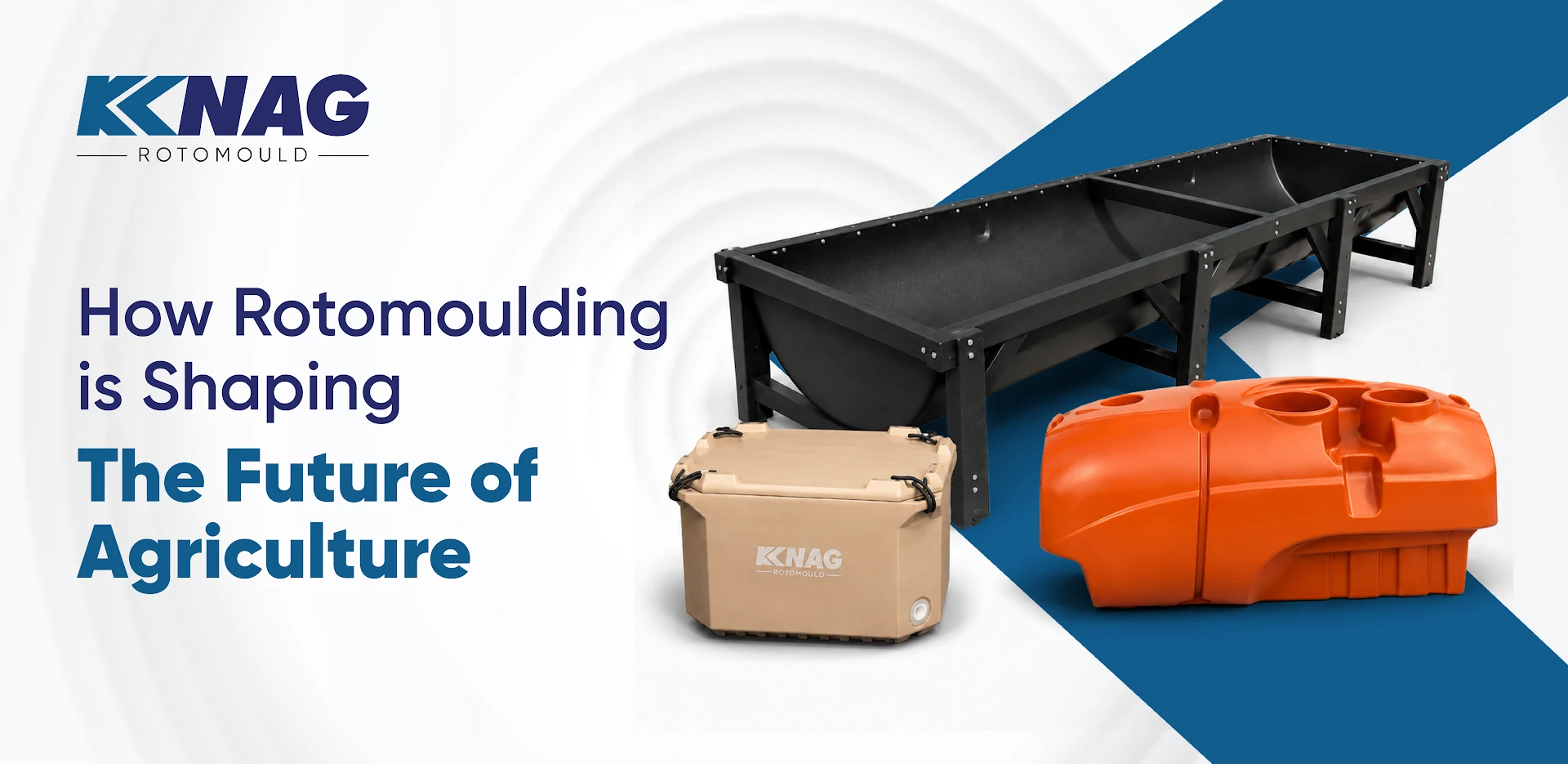
Agriculture faces constant pressure from harsh outdoor conditions, chemical exposure and the need for lightweight, durable equipment. Metal parts can rust. Conventional containers can crack. Both can raise maintenance needs and slow down operations.
That is why rotomoulding is becoming increasingly important in agriculture. Rotational moulding products create durable, hermetically sealed and corrosion-resistant plastic parts that can perform well in demanding farm environments. From sprayer tanks to storage systems and machine covers, the process is helping farmers move toward stronger and more practical equipment.
This blog explores how rotomoulding enables high-volume production of agricultural parts and why it is poised to become the future of farming equipment.
Table of Contents
What Is Rotomoulding?
Rotational moulding is a process in which plastic powder is heated inside a hollow mould as it rotates on two axes. As the material melts, it coats the inside evenly and forms a smooth hollow part with uniform wall thickness. That makes it ideal for tanks and containers. For agriculture, this process offers clear benefits.
- Lightweight parts reduce handling effort and transport load.
- Corrosion resistance helps equipment handle pesticides and fertilisers without degradation.
- UV resistance supports long-term outdoor use.
- Seamless construction prevents leaks and supports chemical-safe storage.
- Complex shapes, such as handles, lids and mounting points, can be moulded in one piece.
It also outperforms metal in several ways. Rotomoulded parts can be as strong as steel in practical use yet remain more economical. They do not rust when exposed to chemicals. They are also lighter, which is valuable for tractor-mounted equipment and mobile field systems.
Key Applications In Agriculture
Sprayer Tanks
Among the many applications of rotomoulding in agriculture, sprayer tanks remain one of the most widely used. These tanks are typically manufactured from food-grade, UV-stabilised Linear Low-Density Polyethylene (LLDPE), which offers excellent chemical resistance, high impact strength and long-term outdoor durability. Mounted on agricultural machinery for pesticide and fertiliser application, LLDPE tanks maintain structural integrity even under continuous exposure to harsh chemicals, sunlight and demanding field conditions. Their main advantages include:
- Hermetically sealed construction with no chemical leaks
- Corrosion resistance against acidic pesticides
- UV resistance for outdoor field exposure
- Integrated mounting points and lids moulded as one piece
Storage Containers
Rotomoulded LLDPE storage solutions provide stable containment for agricultural liquids and bulk materials while resisting corrosion and weathering
- Storage tanks for water and chemicals
- Silos for cereal and grain storage
- Fuel tanks for agricultural machinery
- Urea tanks for fertiliser storage
- Hydraulic oil tanks for maintenance use
- AdBlue tanks for diesel exhaust fluid storage
Animal Husbandry Products
- Calf hutches for housing young livestock
- Drinking troughs for water reservoirs
- Animal feeders that stand the test of time
- Vats for milk or liquid storage
Machinery Components
- Seed and fertiliser hoppers for precision distribution
- Air ducts for machinery ventilation
- Mudguards and covers for tractors and harvesters
- Shells and casings for equipment protection
Specialised Farming Tools
- Grape harvesting baskets for winemaking applications
- Seeders and spreaders for even distribution
- Double-walled polyethylene hollow bodies for lightness and impact resistance
This versatility shows why high-volume rotomoulding for farming equipment is becoming a practical manufacturing route for modern agriculture.
Benefits of Rotomoulding for Modern Agriculture
Rotomoulding offers advantages that go beyond product design. It improves economic operations and sustainability.
- Economic Advantages: Lower cost than metal alternatives, with longer product lifespan and reduced replacement needs due to no rust or corrosion-related maintenance
- Operational Efficiency: Lightweight design improves fuel efficiency in tractors while allowing integration of multiple features, such as handles, lids and sensors, in a single mould and supports high-volume farming equipment production
- Environmental Impact: Corrosion-resistant materials prevent contamination from rust and support more sustainable farming systems
- Durability In Harsh Conditions: UV-resistant, weather-proof and impact-resistant double-walled structures ensure reliable performance in rain, heat, dust and extreme agricultural environments
These factors make rotomoulding a strong choice where reliability and lifecycle value matter.
Real-World Impact And Future Trends
Rotomoulded parts are already used across agriculture, from winemaking to animal husbandry to cereal production. Their presence is growing because they answer the industry’s core need for efficiency, productivity and durability. Future developments are likely to include:
- Sensor integration with moulded space for electronics
- IoT-enabled containers with monitoring sensors
- Bio-based polyethylene for eco-friendly farming
- Double-walled designs for stronger impact resistance
IoT in agriculture will hit $27.89 billion by 2030 (11.3% CAGR). India’s smart agriculture market, dominated by precision farming at 58.19% share, will reach $357.9 million by 2033 at 17.3% CAGR. Bio-based polyethylene will grow 9.8% annually to $3.45 billion by 2030, enabling sustainable mulch films and irrigation systems. Double-walled designs offer enhanced impact resistance for harsh farming conditions.
With 47% farm mechanisation (needs 25 more years to reach 75–80%) and 950,000 tractors sold in 2023, demand for rotomoulded agricultural systems will surge. Foodgrain production hit 357.7 million tonnes in 2024–25, showing improved productivity from modernisation.
As Indian agriculture modernises, demand for these systems will keep rising. Rotomoulding technology is helping create durable, efficient and sustainable machinery solutions.
Why K. K. Nag for Rotomoulding in Agriculture
With over 60+ years of expertise in polymer engineering, K. K. Nag Private Limited delivers customised rotomoulded solutions that address the demanding requirements of modern agriculture. From agricultural sprayer tanks, storage containers and machinery components to other rotational moulding products, every solution is engineered for durability, chemical resistance and long service life.
Supported by in-house design, tooling and manufacturing capabilities, K. K. Nag helps customers develop application-specific products for industrial and agricultural use, working with clients to match material grade, wall thickness and design to real-world operating conditions.
Conclusion
Rotomoulding produces durable, high-volume parts that are essential for modern agriculture. Its most important uses include sprayer tanks, storage containers, animal husbandry products and machinery components.
With rotational moulding products and polymer-engineered products becoming more relevant in farming, K. K. Nag Private Limited continues to support this transformation through rotomoulded solutions in polymer engineering and a strong EPS recycling commitment of 10 tonnes over two years, reinforcing its focus on durable and sustainable agricultural systems.
To explore how K. K. Nag’s rotomoulded solutions can support your agricultural operations, contact our team or visit kknag.com

Featured Blogs
Rotomoulded Septic Tanks and Bio-Toilets for Modern Sanitation
Rotomoulded septic tanks and bio-toilets are seamless, polymer-based sanitation systems engineered through rotational moulding. Used across rural, urban and industrial sites, they replace concrete structures by offering lightweight [...]

How EPP Improves Automotive Acoustics and NVH Performance
Summary: EPP automotive components help manage automotive NVH by reducing vibration transfer, controlling panel resonance, filling cavities and preventing buzz, squeak and rattle. As a lightweight material, EPP [...]
How to Calculate Savings from Switching to Reusable Polymer Solutions
Many businesses compare a disposable box with reusable packaging by looking only at the price of one unit. A corrugated box may appear cheaper than an EPP container [...]
How K. K. Nag Builds Circularity into Polymer Manufacturing
The way manufacturers evaluate polymer products is changing. The question is no longer limited to whether a material can be recycled. Businesses are also considering how long [...]
Get in Touch with Us
We look forward to connecting with you!


