
Polymer Engineering for Sustainability: How Recyclable Foam Materials Are Helping Indian B2B Brands Meet ESG Goals
ESG performance is no longer shaped only by energy use and factory emissions. For Indian B2B brands, the materials used in packaging, the recovery systems around those materials and the reuse cycles built into supply chains are now part of how sustainability is measured and reported. This is why recyclable foam materials, including EPS and EPP, are becoming a more strategic choice for businesses working to meet ESG goals credibly.
Table of Contents
- 01. Why Material Choice Is Now an ESG Decision
- 02. How Recyclable Foam Materials Support ESG Goals
- 02. What B2B Buyers Can Add to Vendor Scorecards
- 03. How Reporting Frameworks Such as GRI and BRSR Connect to Polymer Choices
- 04. Why EPR Is Changing the Direction of Packaging Decisions in India
- 05. How K. K. Nag Supports Circularity Through RecyCole and Lean Manufacturing
- 06. What Indian B2B Brands Can Start Doing Now
- 07. Conclusion
Why Material Choice Is Now an ESG Decision
Sustainability in B2B manufacturing is no longer limited to energy use and factory emissions. Packaging choices, material recovery and reuse cycles are now part of how brands are assessed by investors, OEMs and procurement teams. For many businesses, that means polymer selection has moved from a purely technical decision to a governance and reporting issue as well.
This is especially relevant where businesses rely on protective packaging, returnable transport systems and lightweight industrial components. In such cases, polymer engineered products can influence waste generation, logistics weight, product life and recyclability, all of which connect to ESG performance.
How Recyclable Foam Materials Support ESG Goals
Recyclable foam materials matter because they affect several ESG-linked outcomes at once. They can reduce damage-related waste, improve reuse rates, lower transport burden and support diversion from landfill when collection systems are in place. In practice, that means the material does more than protect the product. It affects the reporting footprint of the supply chain around that product.
Expanded Polystyrene (EPS) remains important in applications where cushioning, insulation and shape-specific protection are required. The sustainability question around EPS is not whether it has value, but whether collection and recovery systems are in place. When they are, EPS can become part of a circular material stream rather than a disposal problem.
According to GRI 301, organisations that identify materials as a material topic are expected to report how they manage materials-related impacts. According to GRI 306, organisations are also expected to disclose waste generated and waste diverted from disposal, including recycling and reuse pathways.
What B2B Buyers Can Add to Vendor Scorecards
For B2B buyers, sustainability claims are only useful when they can be verified. That is why recyclability should be built into vendor scorecards in a measurable way. Buyers do not need a complicated framework to start. They need a few practical questions that connect material choice to reporting value.
A stronger scorecard can include:
- whether the packaging or foam solution is recyclable in practice, not just in theory
- whether the supplier offers collection support or reverse logistics
- whether the supplier can provide data on waste collected, reused or recycled
- whether the packaging is designed for one-time use or repeated cycles
- whether the supplier can explain how its material choice affects landfill diversion and replacement frequency
This is where thermocol recycling becomes especially relevant. If an OEM uses large quantities of EPS-based protective packaging, then its waste-handling pathway becomes part of procurement quality, not just housekeeping.
How Reporting Frameworks Such as GRI and BRSR Connect to Polymer Choices
ESG reporting frameworks do not usually ask whether a company uses EPS or EPP by name. They ask questions that are shaped by those choices. Material selection affects what a company can say about waste, circularity, supplier practices and value-chain management.
In India, that same logic flows into BRSR and BRSR Core. If a buyer is reporting on sustainability performance, then packaging systems that are lighter, reusable or recoverable give that buyer stronger underlying data. Material selection can therefore affect not only operations, but also disclosure quality.
This is why polymer choices matter in ESG reporting. A recyclable, returnable or recoverable solution gives a business more defensible data than a packaging format that is difficult to track after use.
Why EPR Is Changing the Direction of Packaging Decisions in India
India’s regulatory direction is making this even more important. Extended Producer Responsibility has already shifted the conversation from disposal to accountability. Businesses are increasingly expected to think about what happens after packaging is used, not only before it is shipped.
According to the Ministry of Environment, Forest and Climate Change (MoEFCC), the Plastic Waste Management (Amendment) Rules, 2024 continue the Extended Producer Responsibility framework and specify recycling-related obligations and targets for plastic packaging waste.
For B2B brands, this means packaging decisions are becoming more strategic. Materials that can be collected, segregated and reused or recycled are easier to defend in a market moving towards stronger recovery expectations. This does not remove the need for performance. It raises the value of packaging systems that can deliver both protection and traceable circularity.
How K. K. Nag Supports Circularity Through RecyCole and Lean Manufacturing
K. K. Nag has approached this challenge through both recovery systems and manufacturing discipline.
According to K. K. Nag’s RecyCole programme, even small quantities of EPS waste can be collected, the waste is taken to a recycling facility and the recycled Thermocole material is reused in the production of blocks and sheets. According to the same process page, the collection cycle is structured to be easy at source and can support pickup within the next 2 to 3 working days.
That operating model matters because it gives B2B brands something practical to act on. It turns a recyclable material into a recoverable system.
The user-shared examples show how that works on the ground. Golde Automotive India Private Limited, which imports glass for sunroof systems, was generating large amounts of EPS waste. Over the last two years, K. K. Nag collected and recycled 10 tonnes of EPS waste from the plant. In another example, the Resource Recycling Centre in Kalyani Nagar partnered with RecyCole for Thermocole recovery and approximately 4.5 tonnes of EPS waste were collected from the centre over three years.
To date, the RecyCole initiative has successfully diverted more than 900 tonnes of EPS waste from landfills. By reprocessing this material back into production loops rather than letting it accumulate as environmental waste, the initiative has driven a significant reduction in total greenhouse gas emissions.
On the manufacturing side, K. K. Nag also links sustainability to process discipline.
K. K. Nag’s KOpEx (K. K. Nag Operational Excellence) programme combines lean methodologies with green manufacturing principles, focusing on efficiency, sustainability and resource optimisation. All five eligible plants are GreenCo certified under the CII Green Company Rating System.
For business partners, this matters because ESG value does not come only from the product. It also comes from the process behind the product.
What Indian B2B Brands Can Start Doing Now
Indian B2B brands do not need to wait for a full ESG overhaul before acting on packaging and polymer decisions. A practical starting point would include:
- identifying which packaging streams are single-use and which can be made returnable
- separating recyclable EPS waste at source instead of mixing it with general waste
- evaluating where expanded polypropylene foam can replace one-time packaging in repeat logistics loops
- asking suppliers for recovery data that can support internal ESG reviews
- including recyclability and reuse metrics in vendor discussions, not only price and lead time
These are practical decisions, but they compound quickly. Each one improves reporting readiness, strengthens procurement quality and brings ESG performance closer to something measurable and credible.
Conclusion
For Indian B2B brands, ESG performance is increasingly shaped by operational details that were once treated as secondary. Packaging waste, reuse cycles and recoverability now affect how businesses are assessed by customers, regulators and reporting frameworks.
That is why recyclable foams matter. They offer a way to connect product protection with circularity and logistics performance with disclosure readiness. Whether the application calls for reusable industrial packaging, protective EPS formats or expanded polypropylene foam for repeat use, the key issue is no longer material alone. It is the system around that material.
When supported by collection, recycling and lean manufacturing discipline, polymer engineered products can do more than solve an engineering problem. They can help Indian B2B brands move closer to credible, measurable ESG progress.

Featured Blogs
How K. K. Nag Builds Circularity into Polymer Manufacturing
The way manufacturers evaluate polymer products is changing. The question is no longer limited to whether a material can be recycled. Businesses are also considering how long [...]
Returnable EPP Dunnage for Class-A Painted Automotive Parts
Class-A painted automotive parts are the visible surfaces of a vehicle where even minor scratches, scuffs or dents can compromise appearance and perceived quality. Class-A painted automotive parts [...]
How Engineering-Led Packaging Makes Industrial Products Export-Ready
India's manufacturing sector is becoming progressively export-orientated, with engineering goods remaining the country's largest merchandise export segment. According to Engineering Export Promotion Council (EEPC India), India's engineering exports [...]
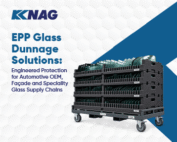
EPP Dunnage Solutions for High-Value Glass
Summary EPP glass dunnage is a lightweight, reusable packaging solution that protects high-value glass from impact, scratches, edge damage and movement during transport through custom-fit cushioning and separation. [...]
Get in Touch with Us
We look forward to connecting with you!


